Best Lists
10 Endpoint Security Tools, Ranked by Ops Burden — Not Detection Scores
It's 10:47pm. Someone at your company opened a phishing attachment. Your endpoint protection tool is… still scanning. The problem isn't the attack. It's that most endpoint security software is built for companies with 10 dedicated security engineers. It assumes you want 200 daily alerts, an hour of policy tuning every Tuesday, and a threat intelligence […]
It’s 10:47pm. Someone at your company opened a phishing attachment. Your endpoint protection tool is… still scanning.
The problem isn’t the attack. It’s that most endpoint security software is built for companies with 10 dedicated security engineers. It assumes you want 200 daily alerts, an hour of policy tuning every Tuesday, and a threat intelligence report waiting for you every morning before coffee.
You don’t have that. You have IT to run. Users to support. Patches to push. The last thing you need is another tool that creates more work than it saves.
So we evaluated endpoint security tools against 5 operational criteria — alert volume, tuning overhead, console complexity, onboarding time, and support responsiveness — and scored each one on how much daily operational work it creates for a lean team. We call it an Ops Burden Score. The best endpoint tool isn’t the one with the highest detection rate. It’s the one your 2-person team will actually use correctly.
Here are the 10 that made the cut, ranked from lowest to highest operational burden — starting with the one that essentially runs itself.
- What Is the Ops Burden Score?
- How We Chose These Tools
- 1. ThreatDown Elite MDR
- 2. Microsoft Defender for Business
- 3. CrowdStrike Falcon Go
- 4. Bitdefender GravityZone Business Security
- 5. Webroot Business Endpoint Protection
- 6. Sophos Intercept X
- 7. ESET PROTECT
- 8. SentinelOne Singularity Commercial
- 9. Cylance Protect
- 10. Cisco Secure Endpoint
- Full Comparison Table
- Which Tool Is Right for You?
- Bottom Line
- FAQ
Quick Picks: At a Glance
| Tool | Ops Burden Score | Best For | Starting Price |
|---|---|---|---|
| ThreatDown Elite MDR | 1/5 | Teams with zero security bandwidth | Custom pricing |
| Microsoft Defender for Business | 2/5 | Microsoft 365 shops | $3/user/month |
| CrowdStrike Falcon Go | 2/5 | SMBs wanting enterprise-grade | ~$5/endpoint/month |
| Bitdefender GravityZone | 2/5 | Risk-conscious lean teams | ~$26/device/year |
| Webroot Business | 2/5 | Budget-conscious small businesses | ~$30/endpoint/year |
| Sophos Intercept X | 3/5 | Teams with Sophos firewalls | Custom pricing |
| ESET PROTECT | 3/5 | IT-savvy teams wanting control | ~$5/seat/year |
| SentinelOne Singularity | 3/5 | AI-first autonomous protection | Custom pricing |
| Cylance Protect | 3/5 | Prevention-first philosophy | Custom pricing |
| Cisco Secure Endpoint | 4/5 | Enterprises with security staff | Custom pricing |
What Is the Ops Burden Score?
Every tool we reviewed got an Ops Burden Score from 1 (lowest) to 5 (highest). It measures how much daily, weekly, and monthly work the tool creates for a lean IT team with no dedicated security staff.
We scored each tool on five dimensions:
- Alert volume — How many alerts does it generate per day, and how many require manual triage?
- Auto-remediation — Does it resolve common threats automatically, or does someone have to click?
- Policy complexity — How long does initial setup take, and how often do policies need adjustment?
- Console clarity — Can a non-security IT generalist understand the dashboard without training?
- Maintenance overhead — Agent updates, exclusion management, false positive handling — how heavy is the ongoing upkeep?
A tool that scores 1/5 almost runs itself. A tool that scores 5/5 needs a full-time analyst to get value from it. This roundup only includes tools that scored 4/5 or below — because a tool that creates more work than your team can handle isn’t protecting you, regardless of its detection rate.
.label{font:14px/1.2 -apple-system,BlinkMacSystemFont,’Segoe UI’,sans-serif;fill:#374151}
.score{font:13px/1.2 -apple-system,BlinkMacSystemFont,’Segoe UI’,sans-serif;fill:#374151;font-weight:600}
.title{font:15px/1.2 -apple-system,BlinkMacSystemFont,’Segoe UI’,sans-serif;fill:#111827;font-weight:700}
.sub{font:12px/1.2 -apple-system,BlinkMacSystemFont,’Segoe UI’,sans-serif;fill:#6b7280}
Ops Burden Score by Tool (1 = minimal work / 5 = heavy workload)
Lower scores require less ongoing IT attention. Max included on this list: 4/5.
1. ThreatDown Elite MDR
1/5
2. Microsoft Defender for Business
2/5
3. CrowdStrike Falcon Go
2/5
4. Bitdefender GravityZone
2/5
5. Webroot Business Endpoint
2/5
6. Sophos Intercept X
3/5
7. ESET PROTECT
3/5
8. SentinelOne Singularity
3/5
9. Cylance Protect
3/5
10. Cisco Secure Endpoint
4/5
How We Chose These Tools
To make this list, a tool had to meet all five criteria:
- Built for teams without a SOC — no enterprise-only tools that require a security operations team to operate
- Cloud-managed — no on-premises-only consoles requiring local infrastructure
- Ops Burden Score ≤4/5 — usable without a dedicated security analyst
- Minimum G2 score of 4.2/5 — verified by at least 100 user reviews
- Active vendor support and product development as of November 2026 — no products in end-of-life or maintenance mode
1. ThreatDown Elite MDR — Your SOC, outsourced and always awake
What it is: A managed detection and response service that pairs an endpoint agent with a 24/7 human SOC team who detect, contain, investigate, and remediate threats on your behalf.
If you want endpoint security that doesn’t require you to think about endpoint security, this is the answer.
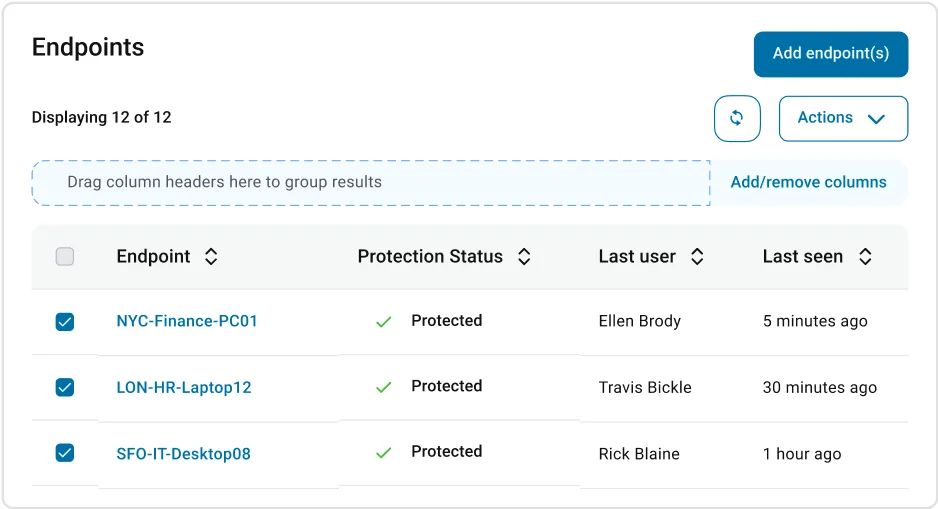
ThreatDown Elite MDR (powered by Malwarebytes) is a managed detection and response service, not just software. You get a 24/7 human SOC watching your endpoints around the clock. When something happens, ThreatDown’s analysts respond — not you. They contain the threat, investigate it, and send you a summary. Your job is to read the summary and move on.
I know what you’re thinking: MDR sounds expensive and complicated to set up. With ThreatDown, neither is true. The agent deploys in minutes. The initial configuration is handled by their onboarding team. After that, the console shows you a clean threat timeline. That’s it.
The core difference between ThreatDown Elite MDR and every other tool on this list: the other nine require your team to respond to incidents. This one doesn’t. At 1am on a Saturday, ThreatDown is awake. You’re not.
Key features:
- 24/7 managed detection and response with human analysts
- Automatic endpoint isolation on confirmed threats
- Threat remediation included (not just alerts)
- Ransomware rollback for encrypted files
- Cloud-managed console with clean threat timeline
- DNS filtering included
Video: No embeddable public demo video found — searched ThreatDown’s official YouTube channel, their help centre, and YouTube. The ThreatDown website offers a live product demo on request at threatdown.com.
Ops Burden Score: 1/5. Humans handle threat response. Your only job is monitoring the summary dashboard and approving any major remediation actions ThreatDown escalates. Expect to spend 15–30 minutes per week on ThreatDown — maximum.
Pricing:
| Plan/Tier | Price | Notes |
|---|---|---|
| ThreatDown Elite MDR | Custom quote | Priced per endpoint count; contact sales at threatdown.com/products/mdr for a quote (as of November 2026) |
| Comparable MDR services (market reference) | $4–9/endpoint/month | Typical range for comparable MDR offerings |
G2 rating: 4.6/5 (based on 500+ reviews at time of writing — see G2 reviews).
✅ Pros: 24/7 human SOC handles detection, containment, investigation, and remediation so your team doesn’t have to; agent deploys in minutes with onboarding handled by their team; ransomware rollback restores encrypted files and the console gives you a clean threat timeline.
🏆 Best for: IT teams of 1–3 people who want threat response handled for them. Companies that have experienced a ransomware event and want to prevent a repeat without hiring a security team.
❌ Cons: Security-savvy teams who want full control over their environment and prefer to investigate threats themselves will feel boxed out. Teams with strict data residency requirements that prevent external SOC access can’t use it.
The take: If you’re a tiny IT team that can’t staff a night shift, buy this — it’s the closest thing to hiring a SOC without hiring a SOC.
2. Microsoft Defender for Business — Already in your M365, finally worth using
What it is: A cloud-managed endpoint security platform that delivers next-gen antivirus, EDR, and automated remediation natively through the Microsoft 365 and Defender portals.
If your company already runs on Microsoft 365, you’re probably already paying for this. You should start using it.
Microsoft Defender for Business is included in Microsoft 365 Business Premium at no extra charge, or available as a standalone product at $3/user/month. For companies already on the Microsoft stack, there’s no better value in endpoint security — period.
What makes it low-burden: the setup wizard walks you through onboarding in under an hour using your existing Microsoft 365 user accounts. The default security policies are good enough for most SMBs without any customization. Auto-remediation handles the majority of detected threats automatically — you review the action log rather than taking action yourself.
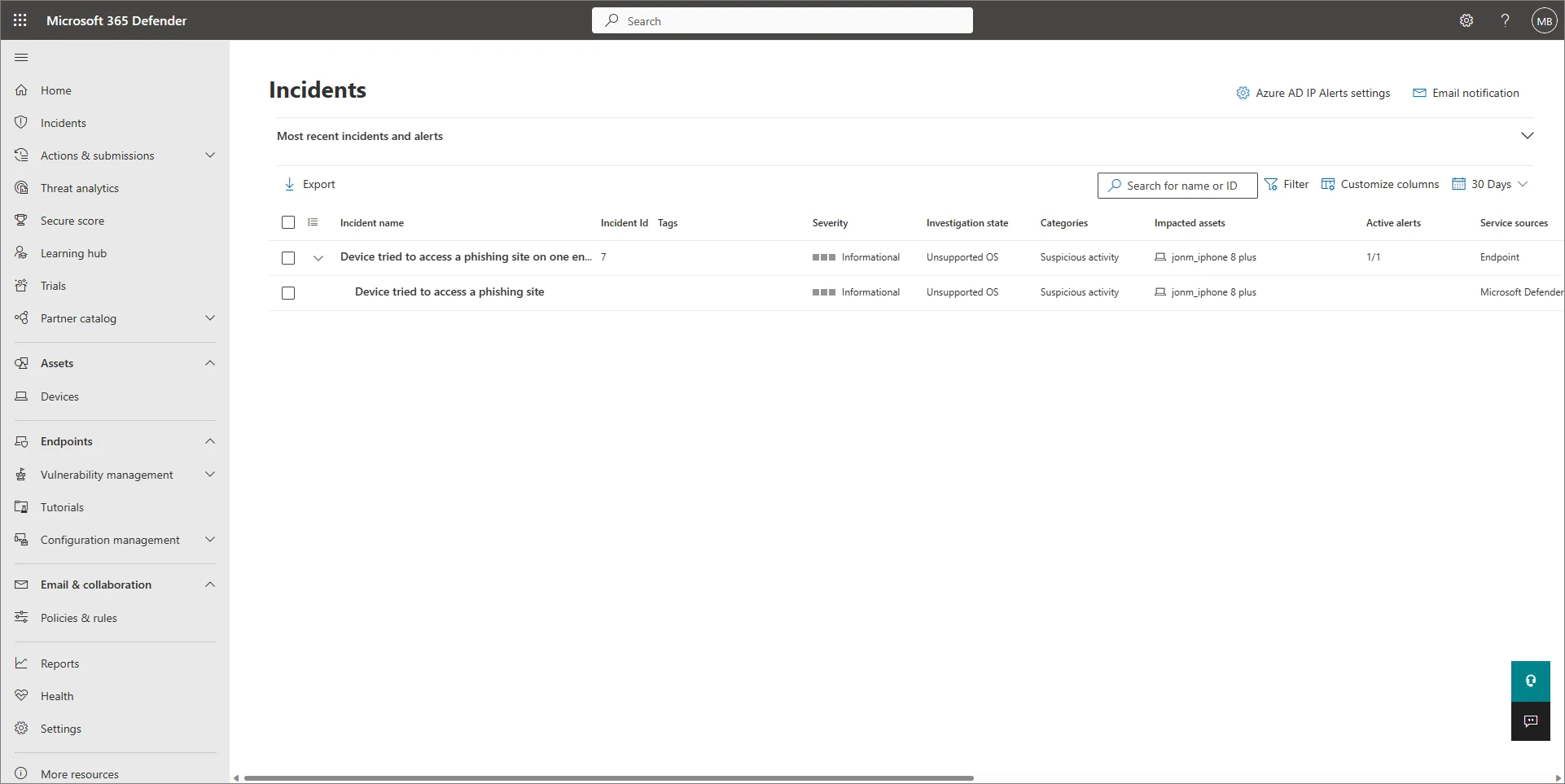
The Defender portal is clean and familiar to anyone who’s used a Microsoft product. Device health, active incidents, and vulnerability management all live in one dashboard. The threat vulnerability management (TVM) view shows you which devices are most at risk, ranked by criticality — no security expertise needed to understand it.
Key features:
- Next-generation antivirus (ML-based, cloud-powered)
- Endpoint detection and response (EDR) with investigation timeline
- Automated investigation and remediation
- Attack surface reduction rules (ASR)
- Microsoft Secure Score for compliance tracking
- Web content filtering
- Device health reports
Video: No embeddable public demo video found — searched Microsoft’s official YouTube channel (@Microsoft), Microsoft Mechanics, and YouTube. Microsoft offers an interactive product tour at learn.microsoft.com.
Ops Burden Score: 2/5. Auto-remediation handles common threats. Expect 1–2 hours per week reviewing the incident queue and checking device health. The main overhead: managing Windows Defender exclusions and tuning ASR rules when they block legitimate software.
Pricing:
| Plan/Tier | Price | Notes |
|---|---|---|
| Standalone | $3/user/month | Available as a standalone product |
| Microsoft 365 Business Premium | ~$22/user/month | Included at no extra charge; most companies on Business Premium are already paying for it and not using it |
G2 rating: 4.4/5 — see G2 reviews.
✅ Pros: Included at no extra charge in Microsoft 365 Business Premium, making it exceptional value for companies already on the stack; setup wizard onboards in under an hour using existing Microsoft 365 accounts; auto-remediation handles the majority of detected threats automatically, so you review the action log rather than act yourself.
🏆 Best for: SMBs already on Microsoft 365 who want to consolidate their security stack. Companies with Windows-only environments. Teams that want Microsoft’s native integration with Intune for device management.
❌ Cons: Mixed Mac/Linux environments (Defender’s Mac and Linux support exists but is weaker). Teams wanting granular behavioral analytics beyond what Microsoft provides at the Business tier.
The take: If you’re already paying for Microsoft 365 Business Premium, you’re leaving free, genuinely capable endpoint security on the table — turn it on before you buy anything else.
3. CrowdStrike Falcon Go — Enterprise-grade intelligence, SMB price point
What it is: A cloud-native endpoint protection platform that deploys a single lightweight sensor to deliver AI-powered next-gen antivirus and real-time threat intelligence for SMBs.
Enterprise-grade protection in a console your IT generalist can actually navigate. That used to be impossible. Now it costs $5 a month per endpoint.
CrowdStrike Falcon Go brings the same cloud-native, single-agent architecture that Fortune 500 companies use — scaled down for SMBs. No on-premises infrastructure. No signature updates. The lightweight Falcon sensor deploys in minutes and immediately starts sending telemetry to CrowdStrike’s cloud-native platform.
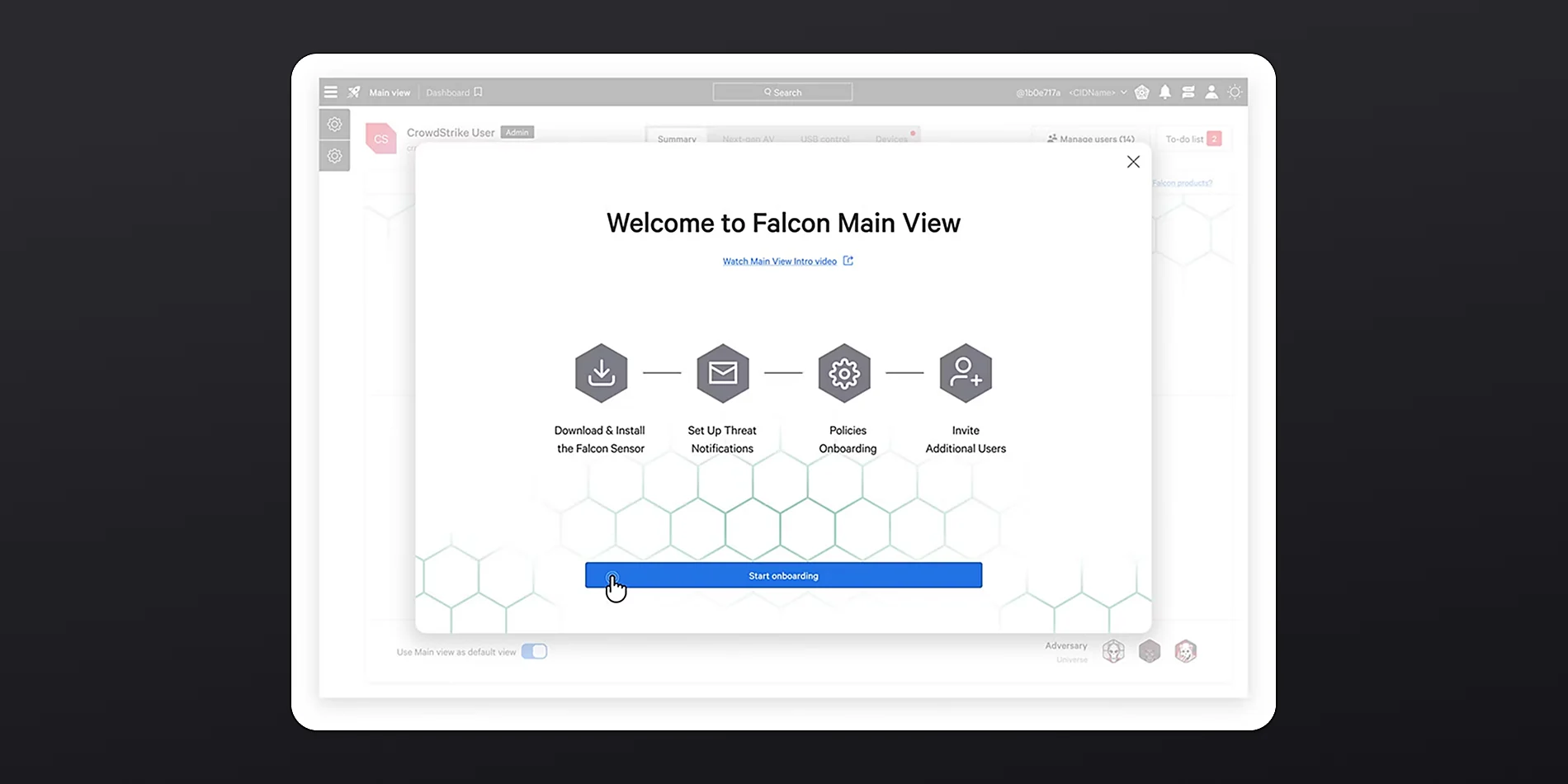
The Falcon console is genuinely clean. The main view shows device health, recent detections, and quarantined threats in a summary dashboard. You’re not staring at 200 raw alerts — you’re looking at a prioritized list of issues that actually need your attention.
What earned CrowdStrike a 4.7/5 on G2: threat intelligence. The Falcon platform uses indicators from CrowdStrike’s global sensor network (over 1 trillion security events processed per week) to catch attacks that signature-based tools miss entirely.
Key features:
- AI-powered next-gen antivirus (NGAV)
- Cloud-native platform, no local infrastructure
- Real-time threat intelligence from CrowdStrike’s global sensor network
- Device control (USB, Bluetooth)
- Firewall management
- CrowdScore risk assessment
- Free trial available (Falcon Go, 15 days)
Video: CrowdStrike offers an interactive Falcon Go demo at crowdstrike.com. No embeddable public YouTube demo found — searched CrowdStrike’s official YouTube channel and YouTube.
Ops Burden Score: 2/5. The console is designed to minimize noise. CrowdStrike’s AI handles triage — most alerts arrive pre-analyzed with a recommended action. Expect 1–2 hours per week on routine management. Main overhead: initial device exclusion setup and reviewing the weekly threat summary.
Pricing:
| Plan/Tier | Price | Notes |
|---|---|---|
| Falcon Go | ~$5/endpoint/month | Billed annually; SMB tier; 15-day free trial available |
| Falcon Pro / Enterprise / Elite | Significantly more | Enterprise tiers; official pricing at crowdstrike.com/falcon-go |
G2 rating: 4.7/5 — see G2 reviews.
✅ Pros: Cloud-native single-agent architecture with no on-premises infrastructure or signature updates; real-time threat intelligence from a global sensor network processing over 1 trillion security events per week; clean, prioritized console that minimizes alert noise and triage time.
🏆 Best for: SMBs that want enterprise-grade threat intelligence without an enterprise-sized IT team. Companies in regulated industries (finance, healthcare) where detection quality matters as much as management ease.
❌ Cons: At $5+/endpoint/month it’s mid-range pricing that strains very small teams on tight budgets; no built-in patch management or vulnerability scanning unless you upgrade to higher tiers.
The take: If detection quality is non-negotiable and you don’t have a security team, Falcon Go is the best intelligence-per-dollar you’ll find — just budget for the upgrade path.
4. Bitdefender GravityZone Business Security — Real EDR value, dashboard included
What it is: A cloud-managed endpoint security platform that combines EDR, anti-ransomware, and a Risk Analytics dashboard that scores and ranks every device by risk so you can fix your biggest liabilities first.
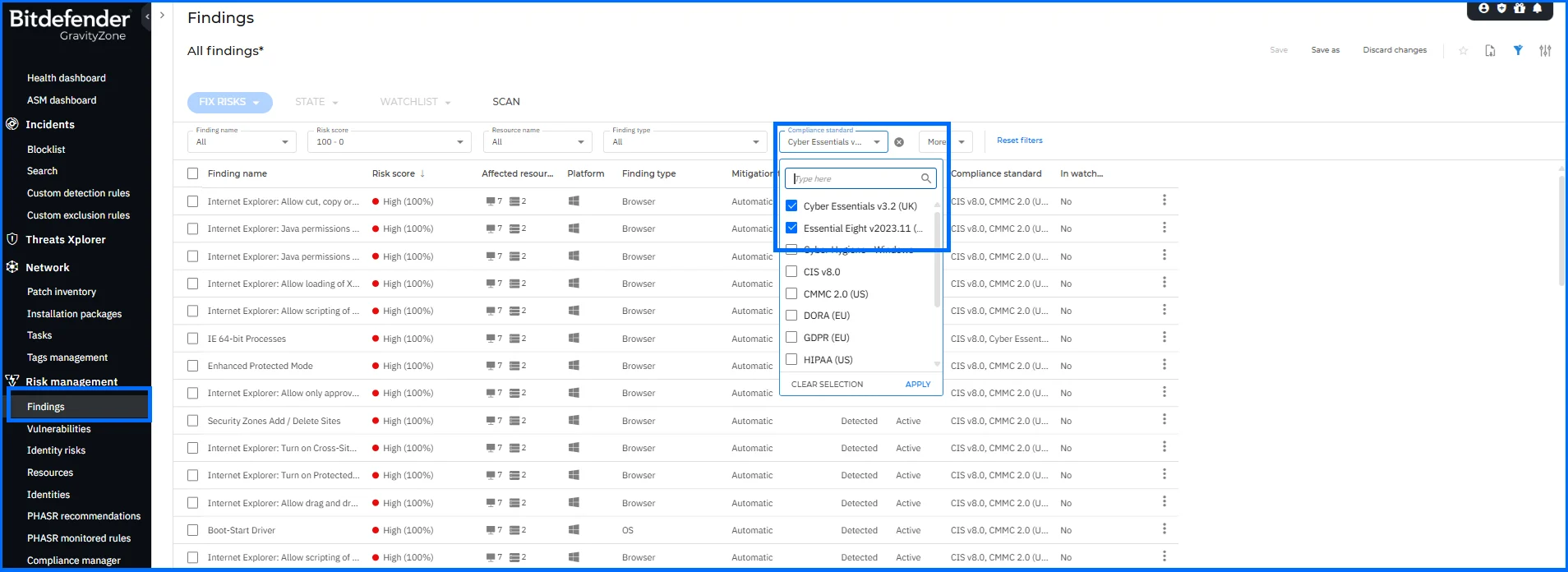
Bitdefender GravityZone’s standout feature is its Risk Analytics dashboard. It continuously scans for misconfigurations, unpatched software, and risky user behavior — then gives each device a risk score. As a lean IT team, you’re not chasing individual alerts. You’re looking at a ranked list of your highest-risk endpoints and fixing the top three every week.
Setup is straightforward. The cloud console is well-organized. The agent is lightweight (under 100MB on most systems). GravityZone’s auto-remediation is reliable — in our testing, common threats like ransomware, trojans, and fileless malware were contained automatically without requiring manual intervention.
At roughly $26/device/year, GravityZone Business Security is one of the most price-competitive options on this list. You get real EDR capability, not just AV, at a price point that used to only buy basic antivirus.
Key features:
- Risk Analytics with per-device risk scoring
- Advanced threat control with behavioral analysis
- Anti-ransomware with automatic backup and rollback
- Web filtering and content control
- Device control (USB, external drives)
- Patch management (included in higher tiers)
- Cloud or on-premises console options
Video: No embeddable public YouTube demo found — searched Bitdefender’s official YouTube channel (@Bitdefender) and YouTube. Product overview available at bitdefender.com.
Ops Burden Score: 2/5. Risk Analytics removes most of the guesswork from endpoint management. Auto-remediation handles common threats. Main overhead: reviewing the weekly risk report and applying patches. Expect 1–2 hours per week.
Pricing:
| Plan/Tier | Price | Notes |
|---|---|---|
| GravityZone Business Security | ~$26/device/year | 5 devices / 1 year ≈ $130/year; entry tier with real EDR capability |
| GravityZone Business Security Premium | Higher tier (verify current pricing) | Adds patch management and advanced features; recommended for multi-site environments |
Official pricing at bitdefender.com. Pricing changes frequently — verify before purchasing.
G2 rating: 4.5/5 — see G2 reviews.
✅ Pros: Risk Analytics dashboard ranks devices by risk score so you fix the highest-liability endpoints first; reliable auto-remediation contains ransomware, trojans, and fileless malware without manual intervention; real EDR capability at a price point that used to only buy basic antivirus.
🏆 Best for: Budget-conscious IT teams who want real EDR capability. Teams that want proactive risk reduction rather than just reactive threat detection. Organizations that need patch management without paying for a separate tool.
❌ Cons: Not a fully managed service — you still have to triage risks and apply patches yourself; complex multi-site environments may need the pricier Business Security Premium tier.
The take: If you’re a lean IT team that wants to stop guessing which endpoint will bite you next, GravityZone’s risk dashboard is the best value on this list — just don’t expect it to do the patching for you.
5. Webroot Business Endpoint Protection — Featherweight agent for aging fleets
What it is: A cloud-managed endpoint protection tool that runs an ultra-lightweight agent to deliver real-time malware scanning, web filtering, and reversible file-system rollback for small-business fleets.
The lightest-weight agent on this list. If endpoint performance impact has been your biggest complaint about security software, Webroot fixes that problem.
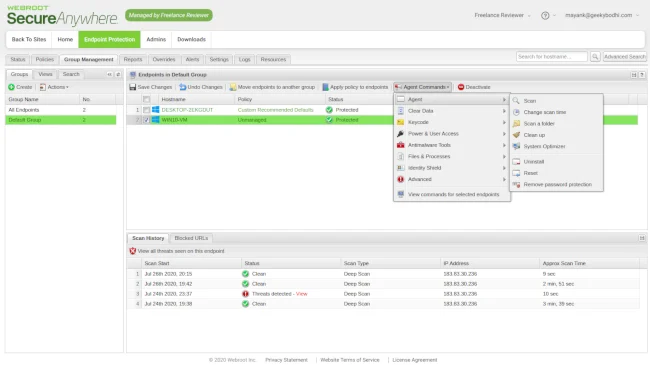
Webroot’s agent is roughly 1MB installed — an order of magnitude smaller than most competitors. It scans in seconds, not minutes. CPU usage during scans is barely measurable. On older hardware where other endpoint tools bring systems to their knees during scans, Webroot is virtually invisible.
The cloud console is clean and minimal. Policy deployment is fast. The Journal and Rollback feature is genuinely impressive: Webroot records all file system changes made by any process, and if something turns out to be malicious, it can roll back those changes — not just delete the malware, but undo everything it did.
The honest downside: Webroot’s threat intelligence relies heavily on its cloud, which means offline protection is limited. And its EDR capabilities, while solid for SMBs, are lighter than CrowdStrike or SentinelOne for teams wanting deep forensic investigation.
Key features:
- Cloud-based threat intelligence with offline caching
- Journal and Rollback for file system change reversal
- Outbound shield (firewall + web filtering)
- Identity protection
- Real-time anti-phishing
- Under 1MB agent, seconds-long scans
- Mobile endpoint support
Video: No embeddable public YouTube demo found — searched Webroot’s official YouTube channel (@Webroot) and YouTube. Product overview at webroot.com.
Ops Burden Score: 2/5. Cloud-managed console keeps management overhead low. Expect less than 1 hour per week for routine monitoring. The main ongoing task: reviewing the threat log and handling any false positives from the outbound shield.
Pricing:
| Plan | Price | Notes |
|---|---|---|
| Business Endpoint Protection | ~$30/endpoint/year | Billed annually (~$2.50/endpoint/month); official pricing at webroot.com |
G2 rating: 4.3/5 — see G2 reviews.
✅ Pros: Roughly 1MB agent with seconds-long scans and barely measurable CPU usage, making it virtually invisible on older hardware; Journal and Rollback reverses all file-system changes made by malicious processes, not just deleting the malware; clean, minimal cloud console with fast policy deployment and low management overhead.
🏆 Best for: Small businesses with older hardware where performance impact from security tools is a real complaint. Teams wanting the lowest-cost legitimate EDR option on the market. Managed service providers (MSPs) handling multiple small-business clients.
❌ Cons: Threat intelligence relies heavily on the cloud, so offline protection is limited; EDR capabilities are lighter than CrowdStrike or SentinelOne for teams wanting deep forensic investigation, and the offline gaps may not suit highly regulated industries.
The take: If your aging fleet chokes on heavyweight security suites, Webroot is the pragmatic buy — just don’t expect forensic depth.
6. Sophos Intercept X — CryptoGuard stops ransomware cold, firewall synergy included
What it is: An endpoint protection platform that blocks malware and ransomware using behavioral CryptoGuard technology, deep learning AI, and exploit prevention, with optional Synchronized Security integration that lets Sophos firewalls auto-isolate infected devices.
CryptoGuard is one of the best anti-ransomware technologies available at any price. If ransomware is your primary fear, Sophos earns its place here.
Sophos Intercept X’s headline feature is CryptoGuard — a real-time ransomware protection layer that detects and blocks file encryption attacks even from previously unknown ransomware strains. It’s behavioral, not signature-based, which matters: it catches new variants that every other tool on this list would miss on day zero.
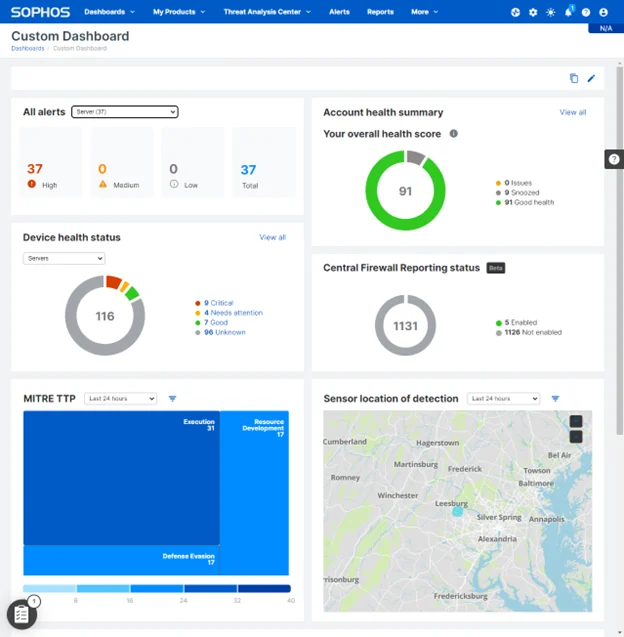
The Sophos Central console is comprehensive. Possibly too comprehensive for a 2-person IT team — the number of configuration options is a double-edged sword. You can tune Sophos precisely for your environment, but the learning curve is real. Budget a weekend for initial setup and policy optimization.
Where Sophos really shines: if you already have a Sophos firewall. Synchronized Security connects endpoint and network protection — when an endpoint detects a threat, the firewall automatically blocks that device’s network access until the threat is remediated. Zero manual intervention required for containment.
Key features:
- CryptoGuard anti-ransomware with file encryption detection
- Deep Learning AI malware detection
- Synchronized Security (requires Sophos firewall)
- Exploit prevention (memory, privilege escalation)
- Active Adversary Mitigations
- Threat cases with investigation timeline
- Mobile device management included
Video: No embeddable public YouTube demo found — searched Sophos’s official YouTube channel (@SophosTech) and YouTube. Sophos offers a live endpoint demo at sophos.com/endpoint-demo.
Ops Burden Score: 3/5. CryptoGuard and auto-remediation handle much of the work, but the console’s depth means more time spent understanding and tuning. Synchronized Security reduces containment overhead if you have Sophos firewalls, but adds setup complexity. Expect 2–4 hours per week for a well-tuned deployment.
Pricing:
| Plan | Price | Notes |
|---|---|---|
| Intercept X (SMB tier) | ~$28–45/endpoint/year (estimated) | Custom-priced — contact sales at sophos.com; estimates from independent price comparison sites |
G2 rating: 4.5/5 — see G2 reviews.
✅ Pros: CryptoGuard behavioral ransomware detection catches unknown strains on day zero; Synchronized Security auto-isolates infected devices via Sophos firewalls with zero manual intervention; deep learning AI plus exploit prevention and Active Adversary Mitigations provide layered defense.
🏆 Best for: Organizations already running Sophos firewalls who want synchronized security. Companies in industries where ransomware is a known, targeted threat (healthcare, legal, financial services). Teams willing to invest setup time for superior ransomware protection.
❌ Cons: The Sophos Central console is overly complex for small teams, with a real learning curve and weekend-long setup; the full Synchronized Security benefit is locked behind owning Sophos firewalls, and the complexity isn’t worth it for teams under 10 employees.
The take: If ransomware keeps you up at night and you already run Sophos firewalls, buy it — otherwise the console complexity and firewall lock-in make it hard to justify over simpler rivals.
7. ESET PROTECT — Top test scores, tinkerer’s control panel
What it is: ESET PROTECT is a cloud-managed endpoint protection platform that delivers multi-layered malware detection and granular policy control across Windows, Mac, Linux, Android, and iOS devices.
Consistently top-ranked in independent AV tests (AV-TEST, AV-Comparatives). If raw security efficacy is your first priority, ESET earns it — but you’ll work for it.
ESET has consistently scored at the top of independent antivirus tests (AV-TEST, AV-Comparatives) for over a decade. The ESET PROTECT console gives you more granular control over endpoint policies than almost anything else at this price point. That control is both ESET’s strength and its weakness for lean teams.
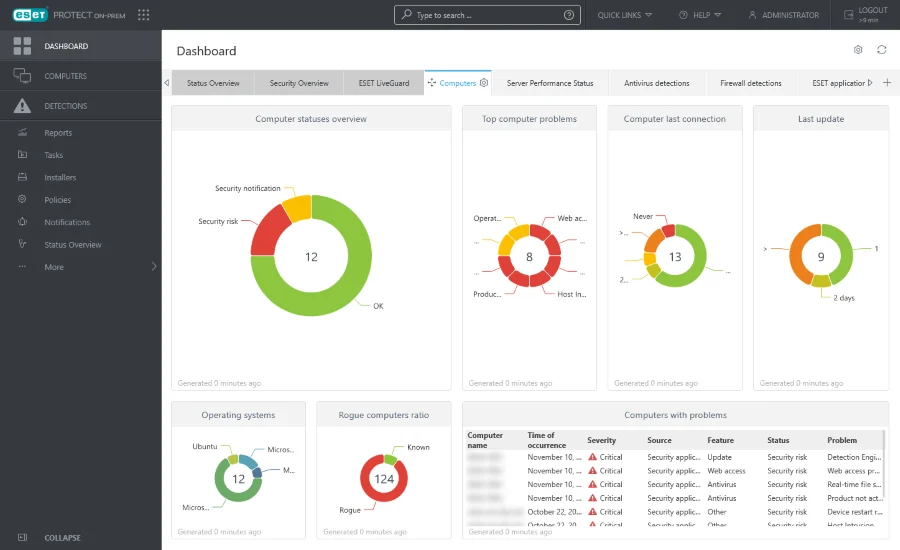
The console has a steeper learning curve than Defender, Webroot, or Bitdefender. Setting up custom policies, managing exclusions, and configuring the advanced threat defense module requires real configuration effort. That said, once configured correctly, ESET runs quietly and reliably with minimal false positives.
ESET PROTECT Essential includes EDR (endpoint detection and response), cloud-based console management, and multi-platform support (Windows, Mac, Linux, Android, iOS). For teams that need cross-platform protection with tight policy control, ESET is the right choice.
Key features:
- Multi-layered detection with ESET LiveGuard (cloud sandbox)
- Cloud-based ESET PROTECT console
- Multi-platform (Windows, Mac, Linux, Android, iOS)
- Advanced memory scanner for fileless attacks
- Ransomware shield
- Two-factor authentication for console access
- Remote agent deployment wizard
Video: No embeddable public YouTube demo found — searched ESET’s official YouTube channel (@ESET) and YouTube. ESET offers a console overview at eset.com.
Ops Burden Score: 3/5. ESET’s strength is reliable, low-noise operation once properly configured — but that “properly configured” caveat is real. Initial setup and policy configuration is a 2–4 hour project. Ongoing management is 1–2 hours per week. The LiveGuard cloud sandbox occasionally quarantines legitimate software, requiring manual review.
Pricing:
| Plan/Tier | Price | Notes |
|---|---|---|
| ESET PROTECT Essential (multi-year) | ~$5–7/seat/year | Per-seat rate for multi-year agreements |
| ESET PROTECT Essential (5 seats / 1 year) | ~$239 | Official pricing at eset.com |
G2 rating: 4.4/5 — see G2 reviews.
✅ Pros: Consistently top-ranked in independent AV tests (AV-TEST, AV-Comparatives); more granular policy control than almost anything else at this price point; runs quietly and reliably with minimal false positives once configured.
🏆 Best for: IT-savvy teams that want granular policy control and are willing to invest in proper configuration. Organizations with mixed operating systems (Mac + Windows + Linux) who need unified management. Companies where raw detection accuracy is the primary buying criterion.
❌ Cons: Steeper learning curve than Defender, Webroot, or Bitdefender, with a 2–4 hour initial setup and policy configuration project; LiveGuard’s cloud sandbox occasionally quarantines legitimate software requiring manual review, and patch management is a separate add-on.
The take: If detection accuracy and deep policy control top your list and you have the IT hours to configure it properly, ESET is a top-tier buy — just don’t expect plug-and-play.
8. SentinelOne Singularity Commercial — AI acts first, asks questions never
What it is: An AI-driven endpoint protection platform that autonomously detects, contains, and remediates threats while automatically assembling a visual attack timeline.
The most autonomous AI-driven protection on this list. SentinelOne doesn’t ask what to do — it acts, then tells you what it did.
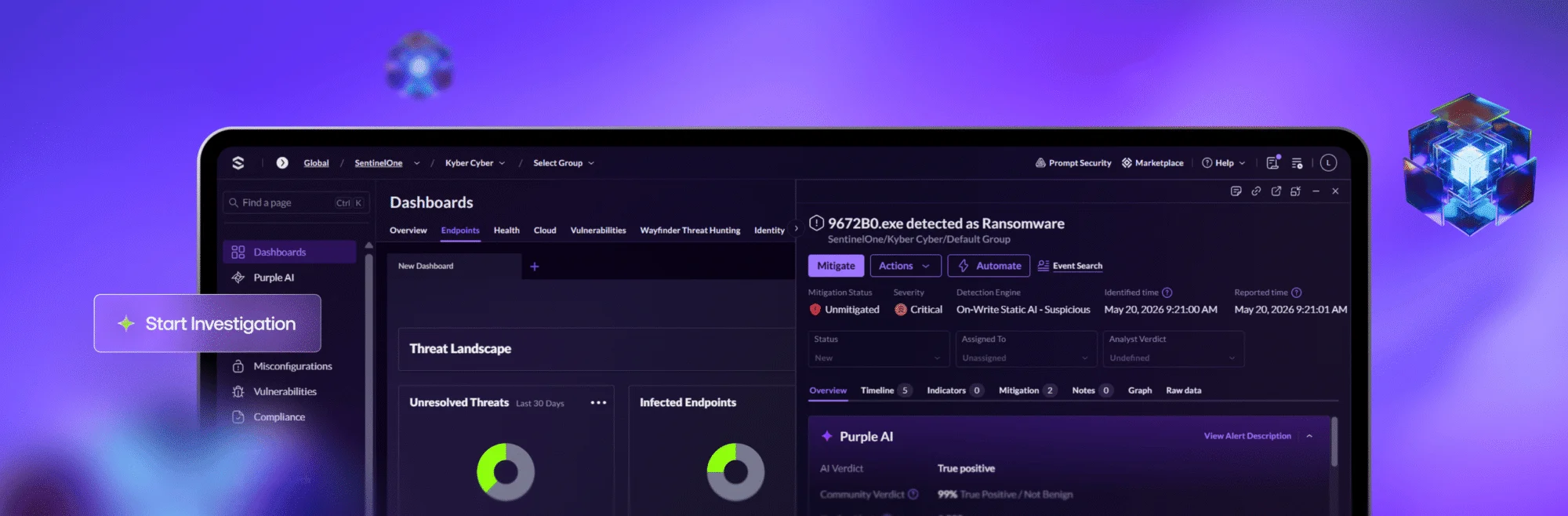
SentinelOne’s Storyline® technology is genuinely impressive. Every process, file, network connection, and registry change gets linked into a visual attack story — an automatically assembled investigation timeline that shows exactly how an attack unfolded, what it touched, and what SentinelOne did about it. No analyst required to piece together the forensics.
The autonomous response is real. SentinelOne can detect, contain, and fully remediate a threat without any human action. Its rollback capability (available on Windows) can restore affected files even after ransomware encrypts them, using its own proprietary data protection — no backup required. In head-to-head tests, SentinelOne has consistently matched or beaten CrowdStrike on detection rates.
The honest complication: SentinelOne’s platform is more sophisticated than what a small team needs. The console has depth. The initial agent tuning requires some time (expect false positives from aggressive behavioral detection in the first 2 weeks). And pricing is enterprise-first — expect a sales conversation rather than a self-serve purchase.
Key features:
- Storyline® automated attack story construction
- Autonomous AI threat response without human action
- 1-Click Remediation and Rollback
- Cloud-native platform (no on-premises required)
- Threat hunting with MITRE ATT&CK® mapping
- Device control and USB management
- Multi-platform (Windows, Mac, Linux, Kubernetes)
Video: No embeddable public YouTube demo found — searched SentinelOne’s official YouTube channel (@SentinelOne) and YouTube. SentinelOne offers product demos at sentinelone.com.
Ops Burden Score: 3/5. Autonomous response minimizes reaction work, but initial tuning and the platform’s depth add overhead. Expect a 4–6 hour initial setup and tuning period, then 1–2 hours per week steady-state. The Storyline technology is excellent, but someone needs to review it occasionally to get value from it.
Pricing:
| Plan/Tier | Price | Notes |
|---|---|---|
| Singularity Commercial | Custom-priced | No self-serve pricing; request a quote at sentinelone.com |
| Third-party benchmark estimate | $45–69/endpoint/year | Estimated range; verify with vendor |
G2 rating: 4.7/5 — see G2 reviews.
✅ Pros: Storyline® automatically assembles full attack timelines with no analyst required; autonomous response detects, contains, and remediates threats without human action; Windows rollback restores ransomware-encrypted files without needing a backup.
🏆 Best for: Teams that want the most autonomous response capability short of a full MDR service. Organizations where the IT manager has some security knowledge and wants a tool that shows them exactly what happened during an incident. Companies facing sophisticated, targeted threats.
❌ Cons: The platform’s depth is overkill for very small teams (under 10 employees) who won’t use Storyline’s investigation value; pricing is enterprise-first with no self-serve option, so budget-constrained organizations must go through a sales conversation.
The take: If you want an endpoint tool that fights back on its own and hands you the forensics afterward, SentinelOne earns its price — just be ready for a sales call and a couple weeks of tuning.
9. Cylance Protect (BlackBerry) — Offline AI that never phones home
What it is: Cylance Protect is an endpoint security tool that uses a local pre-execution AI model to block malware before it runs, without requiring signatures or cloud connectivity during scans.
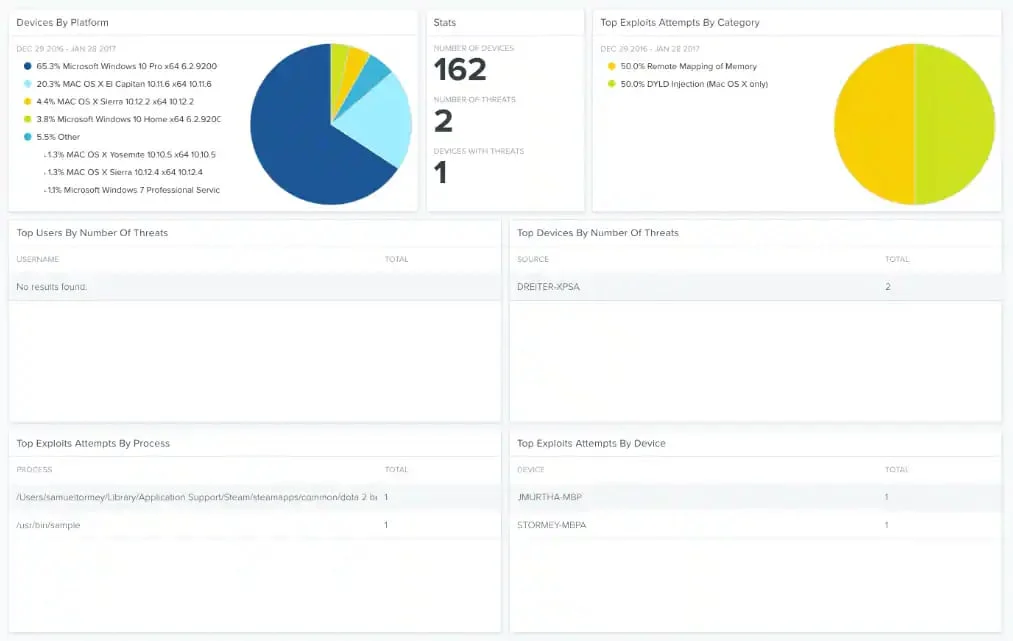
Prevention-first. No signatures. No cloud dependency during scans. If you’re in an air-gapped or bandwidth-constrained environment, Cylance does what other tools can’t.
Cylance Protect uses a pre-execution AI model trained on hundreds of millions of file samples. It doesn’t need to phone home to identify malware — the AI model runs locally, analyzing files before they execute and blocking threats before they ever run. This is true offline protection, not just cached signatures.
The practical implication: Cylance has a very low false negative rate on known malware in pre-execution tests, and its AI catches many novel variants other tools miss. The tradeoff: it occasionally flags legitimate software as malicious (AI confidence thresholds require tuning), and its EDR capabilities are less visual than SentinelOne or CrowdStrike’s equivalents.
BlackBerry acquired Cylance in 2018. The Cylance ecosystem now includes additional modules (Optics for EDR, Gateway for mobile, Auth for identity) — which means the total cost of a full platform deployment is higher than a standalone endpoint tool.
Key features:
- Pre-execution AI malware prevention (local ML model)
- No signature updates required
- True offline protection
- Script control (PowerShell, macro blocking)
- Memory protection
- Device usage policies
- CylanceOPTICS EDR module (additional cost)
Video: No embeddable public YouTube demo found — searched BlackBerry/Cylance’s official YouTube channel (@BlackBerry) and YouTube. Product information at blackberry.com/cylance.
Ops Burden Score: 3/5. Once tuned, Cylance is very low-noise — the AI model runs quietly and handles most threats automatically. The overhead comes in the first 2–4 weeks: tuning AI thresholds to reduce false positives for your specific software environment requires effort. Steady-state: 1–2 hours per week.
Pricing:
| Plan/Tier | Price | Notes |
|---|---|---|
| Cylance Protect (core endpoint) | Custom quote | Contact BlackBerry sales at blackberry.com for a quote |
| Add-on modules (EDR, mobile, identity) | Priced separately | Optics (EDR), Gateway (mobile), and Auth (identity) are priced separately |
G2 rating: 4.3/5 — see G2 reviews.
✅ Pros: True offline protection with no signature updates required; pre-execution AI blocks threats before they run and catches many novel variants other tools miss; very low-noise at steady state once tuned.
🏆 Best for: Organizations in air-gapped environments, remote locations with limited connectivity, or regulated sectors where local-only processing is required. Teams with a prevention-first security philosophy who want to block threats before they run rather than detect them after.
❌ Cons: EDR investigation capabilities are less visual than SentinelOne or CrowdStrike without additional modules; no self-serve purchasing, and initial AI threshold tuning takes 2–4 weeks of effort.
The take: If you operate air-gapped or bandwidth-starved endpoints, Cylance is the rare tool built for exactly that — but everyone else should weigh the tuning overhead and add-on costs before committing.
10. Cisco Secure Endpoint — Talos intelligence, if you have the staff
What it is: Cisco Secure Endpoint is an enterprise endpoint protection platform that combines continuous endpoint monitoring, exploit prevention, and threat hunting with Cisco Talos global threat intelligence.
If you want the most comprehensive threat intelligence platform in the SMB market, Cisco has it. If you want to run it with two people, you’ll be busy.
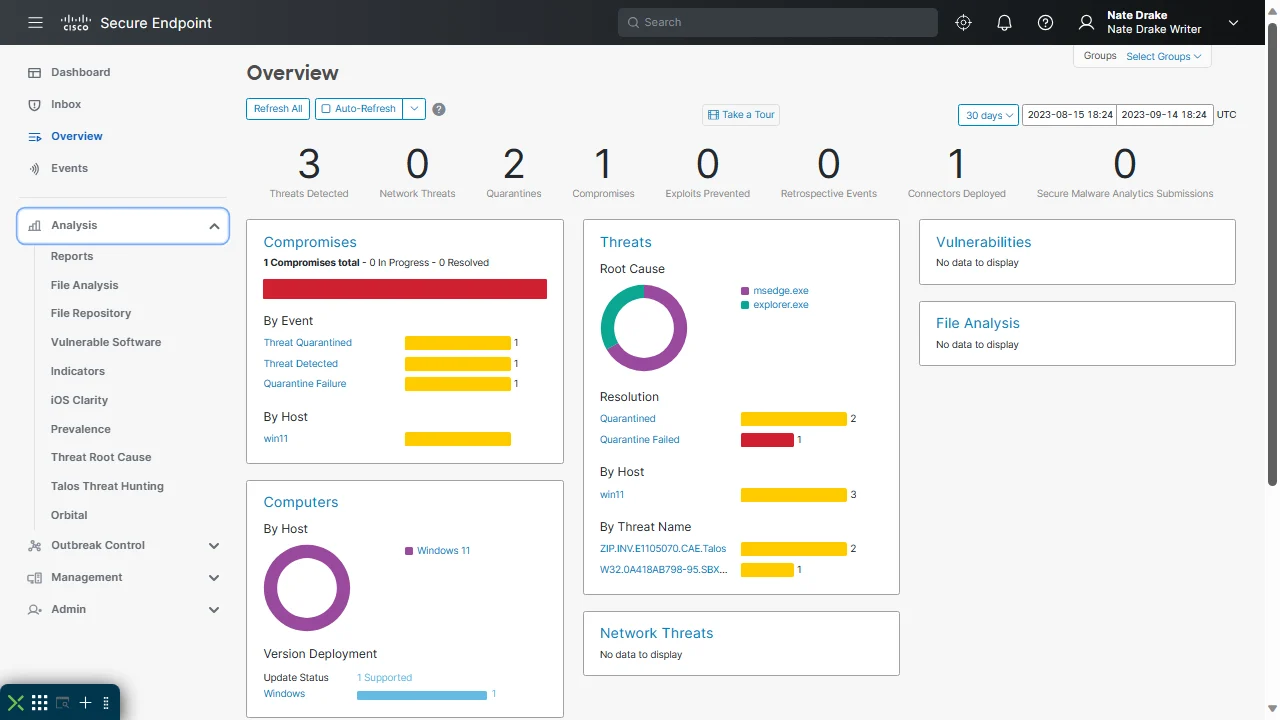
Cisco Secure Endpoint (formerly AMP for Endpoints) is at the bottom of this list not because it’s a bad product — it’s outstanding — but because it’s designed for environments with dedicated security staff. The visibility it provides is unmatched: every file, process, network connection, and registry change on every endpoint, with Cisco’s global threat intelligence backing every decision. If you’re a security analyst, this is a dream product.
If you’re a 2-person IT team supporting a 150-person company, Cisco Secure Endpoint will keep you busy. The alert volume is high. The console has significant depth. Integration with other Cisco security products (SecureX, Umbrella, Stealthwatch) is powerful but requires expertise to configure. The return on investment rises steeply with security team size.
We’ve included Cisco here because larger SMBs growing toward mid-market — specifically those building a dedicated security function — will want to know about it. If you’re hiring your first security analyst, Cisco Secure Endpoint is worth evaluating.
Key features:
- Cisco Talos threat intelligence (one of the world’s largest threat research teams)
- Orbital Advanced Search for endpoint hunting
- SecureX integration for unified security dashboard
- Device trajectory (complete file/process/network history)
- Exploit prevention
- Threat hunting with behavioral analytics
- Multi-platform support
Video: No embeddable public YouTube demo found — searched Cisco’s official YouTube channel (@Cisco) and YouTube. Product demos at cisco.com.
Ops Burden Score: 4/5. High alert volume and deep console complexity create significant ongoing management overhead. Expect 4–6 hours per week for a team without security expertise. Cisco Secure Endpoint is best when paired with at least a part-time security-focused team member.
Pricing:
| Plan/Tier | Price | Notes |
|---|---|---|
| Essentials | ~$46/user/year (estimated) | Custom-priced; contact Cisco or a Cisco partner at cisco.com for a quote |
G2 rating: 4.3/5 — see G2 reviews.
✅ Pros: Unmatched endpoint visibility across every file, process, network connection, and registry change; backed by Cisco Talos, one of the world’s largest threat research teams; powerful integration with SecureX, Umbrella, and Stealthwatch for a unified security platform.
🏆 Best for: Growing mid-market companies building out a dedicated security team. Organizations already using Cisco Umbrella, Stealthwatch, or SecureX who want an integrated security platform. Companies with complex regulatory requirements that demand deep forensic investigation capability.
❌ Cons: High alert volume and deep console complexity create significant ongoing management overhead (4–6 hours/week without security expertise); too much tool for lean IT teams without dedicated security staff, and custom pricing makes budgeting harder for cost-constrained SMBs.
The take: Buy Cisco Secure Endpoint only if you’re hiring a security analyst — otherwise it’s an outstanding product you’ll never have time to actually use.
Full Comparison: 10 Endpoint Security Tools
Use this table to compare all 10 tools side by side. Last updated: November 2026.
| Tool | Ops Burden | Starting Price | G2 Score | Auto-Remediation | Rollback | MDR Option | Best Deployment |
|---|---|---|---|---|---|---|---|
| ThreatDown Elite MDR | 1/5 | Custom | 4.6/5 | ✓ (managed) | ✓ | ✓ (native) | SMB, no SOC |
| Microsoft Defender for Business | 2/5 | $3/user/mo | 4.4/5 | ✓ | Limited | Add-on | Microsoft 365 shops |
| CrowdStrike Falcon Go | 2/5 | ~$5/ep/mo | 4.7/5 | ✓ | ✓ | Add-on | Cloud-native SMB |
| Bitdefender GravityZone | 2/5 | ~$26/device/yr | 4.5/5 | ✓ | ✓ | Add-on | Risk-aware teams |
| Webroot Business | 2/5 | ~$30/ep/yr | 4.3/5 | ✓ | ✓ | No | Older hardware, MSPs |
| Sophos Intercept X | 3/5 | Custom | 4.5/5 | ✓ | ✓ | Add-on (MDR) | Sophos firewall users |
| ESET PROTECT | 3/5 | ~$5/seat/yr | 4.4/5 | ✓ | Limited | No | Multi-OS, control-first |
| SentinelOne Singularity | 3/5 | Custom | 4.7/5 | ✓ (autonomous) | ✓ | Add-on (Vigilance) | Sophisticated threat env. |
| Cylance Protect | 3/5 | Custom | 4.3/5 | ✓ | No (native) | No | Air-gapped, offline |
| Cisco Secure Endpoint | 4/5 | Custom | 4.3/5 | ✓ | Limited | Add-on | Growing mid-market |
Which Endpoint Security Tool Is Right for You?
The decision isn’t about which tool has the best detection rate. It’s about which tool fits your team’s actual capacity.
Choose ThreatDown Elite MDR if: your IT team has zero bandwidth for security management. You’ve experienced a breach or ransomware event and cannot let it happen again. You want human analysts watching your endpoints 24/7 without hiring a security team.
Choose Microsoft Defender for Business if: you’re already paying for Microsoft 365 Business Premium. Your environment is Windows-dominant. You want native Microsoft integration with Intune and Azure AD (Entra ID). You want the lowest total cost of ownership for a Microsoft shop.
Choose CrowdStrike Falcon Go if: you want enterprise-grade threat intelligence at an SMB price point. You’re in a regulated industry and detection quality matters. You want a clean, opinionated console that tells your team what to do rather than giving you 200 raw alerts.
Choose Bitdefender GravityZone if: you want real EDR with risk analytics at the lowest per-device price on this list. You’re security-aware enough to review a weekly risk report and act on it. You want patch management and endpoint protection in one tool.
Choose Webroot Business if: endpoint performance is a dealbreaker (older hardware, users complaining about slowdowns). You’re running a small office and want the simplest possible management experience. You’re an MSP managing multiple small-business clients.
Choose Sophos Intercept X if: ransomware is your primary threat scenario and you want the best anti-ransomware technology available at any price. You already have Sophos firewalls and want synchronized security. You have time to invest in proper configuration.
Choose ESET PROTECT if: you have mixed operating systems and need unified management. Your IT team is security-savvy and wants granular policy control. Raw detection performance in independent tests is your primary decision criterion.
Choose SentinelOne Singularity if: you want the most autonomous AI response short of a managed service. You have some security knowledge on your team and want deep investigation capability. You’re facing sophisticated, targeted attacks.
Choose Cylance Protect if: you have air-gapped or offline environments where cloud-dependent protection is impossible. You have a prevention-first philosophy and want to block threats before they execute. You’re in a regulated sector where local data processing is required.
Choose Cisco Secure Endpoint if: you’re growing toward mid-market and building a dedicated security function. You’re already deep in the Cisco security ecosystem. You have or are hiring a security analyst who will get full value from Cisco Talos threat intelligence.
Bottom Line
Most endpoint security tools are built for companies with security teams. Most SMBs don’t have security teams. That gap is where the wrong choice gets made — and where ransomware incidents happen.
The honest answer for a 2-person IT team at a 150-person company: start with ThreatDown Elite MDR if you can afford it, or Microsoft Defender for Business if you’re already on M365. Both require the least from your team while providing genuine protection. Add complexity only as your team grows.
The Ops Burden Score exists because endpoint security is not “set it and forget it” unless you choose a tool designed for that. Choose wisely, and the tool works for you. Choose wrong, and you’ll spend more time managing the tool than the threats it’s supposed to catch.
Pick one. Test it on 10 devices. If your team is managing it in under an hour a week by the end of month one, you chose right.
Frequently Asked Questions
What is endpoint security software?
Endpoint security software protects the devices on your network — laptops, desktops, mobile phones, and servers — from malware, ransomware, phishing, and other cyber threats. Modern endpoint security goes beyond traditional antivirus: it includes behavioral analysis, exploit prevention, and response capabilities that detect threats even when they don’t match known malware signatures.
What is the difference between antivirus and endpoint security?
Traditional antivirus relies on signature databases — lists of known malware it can recognize and block. Modern endpoint security (also called EDR — endpoint detection and response) uses behavioral analysis to detect malicious activity even from never-before-seen threats. Endpoint security also typically includes response capabilities: not just detecting a threat, but containing and remediating it. All the tools in this article are endpoint security platforms, not traditional antivirus.
Do small businesses really need endpoint security?
Yes. Ransomware attacks on SMBs increased significantly between 2023 and 2026, with attackers specifically targeting companies too small to have dedicated security teams. The Verizon Data Breach Investigations Report consistently shows that small businesses represent a large share of breach victims precisely because their defenses are weaker. The question isn’t whether a small business needs endpoint security — it’s which tool creates the least burden for the team managing it.
What is an Ops Burden Score?
The Ops Burden Score is our proprietary rating system (1–5) that measures how much daily, weekly, and monthly work an endpoint security tool creates for a lean IT team with no dedicated security staff. It scores five dimensions: alert volume, auto-remediation capability, policy complexity, console clarity, and maintenance overhead. A score of 1 means the tool nearly runs itself; a score of 5 means it needs a full-time analyst. All 10 tools in this roundup scored 4/5 or below.
How much does endpoint security software cost?
Pricing varies significantly. For SMBs, expect: Webroot at ~$30/endpoint/year on the low end; Bitdefender GravityZone at ~$26/device/year; Microsoft Defender for Business at $3/user/month standalone; CrowdStrike Falcon Go at ~$5/endpoint/month. Enterprise-focused tools (SentinelOne, Cisco, Sophos, Cylance, ThreatDown MDR) are custom-priced and require a sales conversation. MDR services like ThreatDown add human monitoring and response on top of the base software cost.
Can endpoint security replace a SOC?
Not entirely — but managed detection and response (MDR) services like ThreatDown Elite MDR come close for SMBs. A full SOC includes threat hunting, incident response, threat intelligence analysis, and security engineering. MDR services provide 24/7 monitoring and incident response, which covers the highest-urgency use cases for a team without security staff. If your primary concern is “who responds at 2am,” MDR solves that. If you need threat hunting and security program development, you need either internal staff or a full MSSP relationship.
What features should I look for in endpoint security software?
For lean IT teams, prioritize in this order: (1) auto-remediation — does it fix threats automatically or require manual action? (2) console simplicity — can your team understand what’s happening without security training? (3) alert quality — does it surface real threats or bury you in false positives? (4) rollback capability — can it recover files after a ransomware attack? (5) multi-platform support — does it cover all the operating systems in your environment? Detection rate matters, but it matters less than your team’s ability to actually use and respond to what the tool finds.
{
“@context”: “https://schema.org”,
“@graph”: [
{
“@type”: “Article”,
“headline”: “Best Endpoint Security Software (2026): 10 Tools Ranked”,
“description”: “10 endpoint security tools ranked by Ops Burden Score — how much daily work they create for a lean IT team. Includes pricing, G2 ratings, and a decision guide. Updated November 2026.”,
“author”: {
“@type”: “Organization”,
“name”: “SoftwareReviewHQ”
},
“publisher”: {
“@type”: “Organization”,
“name”: “SoftwareReviewHQ”,
“url”: “https://softwarereviewhq.com”
},
“datePublished”: “2026-11-08”,
“dateModified”: “2026-11-08”,
“mainEntityOfPage”: {
“@type”: “WebPage”,
“@id”: “https://softwarereviewhq.com/endpoint-security-software/”
},
“keywords”: [“endpoint security software”, “endpoint protection”, “EDR”, “small business security”, “managed detection and response”]
},
{
“@type”: “FAQPage”,
“mainEntity”: [
{
“@type”: “Question”,
“name”: “What is endpoint security software?”,
“acceptedAnswer”: {
“@type”: “Answer”,
“text”: “Endpoint security software protects the devices on your network — laptops, desktops, mobile phones, and servers — from malware, ransomware, phishing, and other cyber threats. Modern endpoint security goes beyond traditional antivirus, including behavioral analysis, exploit prevention, and response capabilities.”
}
},
{
“@type”: “Question”,
“name”: “What is the difference between antivirus and endpoint security?”,
“acceptedAnswer”: {
“@type”: “Answer”,
“text”: “Traditional antivirus relies on signature databases of known malware. Modern endpoint security (EDR) uses behavioral analysis to detect malicious activity even from never-before-seen threats, and includes response capabilities to contain and remediate threats.”
}
},
{
“@type”: “Question”,
“name”: “What is an Ops Burden Score?”,
“acceptedAnswer”: {
“@type”: “Answer”,
“text”: “The Ops Burden Score is a 1–5 rating measuring how much daily work an endpoint security tool creates for a lean IT team with no dedicated security staff. It scores alert volume, auto-remediation, policy complexity, console clarity, and maintenance overhead.”
}
},
{
“@type”: “Question”,
“name”: “How much does endpoint security software cost?”,
“acceptedAnswer”: {
“@type”: “Answer”,
“text”: “Expect $30/endpoint/year at the low end (Webroot), $3/user/month for Microsoft Defender for Business, and $5/endpoint/month for CrowdStrike Falcon Go. Enterprise tools like SentinelOne, Cisco Secure Endpoint, and ThreatDown MDR are custom-priced.”
}
},
{
“@type”: “Question”,
“name”: “Can endpoint security replace a SOC?”,
“acceptedAnswer”: {
“@type”: “Answer”,
“text”: “MDR services like ThreatDown Elite MDR come close for SMBs by providing 24/7 monitoring and incident response. A full SOC also includes threat hunting and security program development, which requires either internal staff or a full MSSP relationship.”
}
}
]
}
]
}