Best
Best Ranking Software in 2026: 6 Tools Tested and Ranked
Compare the 6 best ranking software tools of 2026. We tested Semrush, Ahrefs, SE Ranking, AccuRanker, Mangools, and Google Search Console — with pricing, screenshots, and an honest verdict on who each tool is actually for.
Ranking software tells you if your SEO is working. Without it, you’re guessing.
Here’s what most SEO blogs get wrong: they treat rank tracking as an afterthought. A quick note at the bottom of an SEO tools post. But if you’re serious about organic traffic, your ranking software is your scoreboard. It tells you what’s up, what’s down, and where to focus next.
I’ve used all six tools on this list with real client sites. These aren’t affiliate picks — they’re the tools that have survived actual use in production SEO workflows.
The short version:
- Semrush – Best all-in-one. Best if you want rank tracking plus the full SEO suite.
- Ahrefs – Best for data depth. Serious backlink data with solid rank tracking.
- SE Ranking – Best value mid-market. Powerful, affordable, and ahead on AI features.
- AccuRanker – Best for agencies. Fast, accurate, built for high-volume tracking.
- Mangools – Best budget pick. Simple interface, solid accuracy, low entry price.
- Google Search Console – Best free option. No frills, but it’s Google’s own data.
How We Chose These Tools
Not every “rank tracker” deserves to be on this list. Here’s what we looked for:
- Accuracy: Does it match what Google Search Console shows? Off-by-more-than-2 tools got cut.
- Update frequency: Daily updates minimum. Weekly is unacceptable in 2026.
- Local tracking: Can it track by city, not just country?
- Historical data: At least 12 months of ranking history.
- SERP features: Does it track featured snippets, People Also Ask, and AI Overviews?
- Value: Does the price match what you actually get?
Related: Best SEO Tools for Small Business
1. Semrush – Best All-in-One Ranking Software
If you only use one SEO tool, Semrush should be it.
Semrush’s Position Tracking module is one of the most complete rank trackers available. You set it up with your domain, target location, device type, and keywords — and it updates daily.
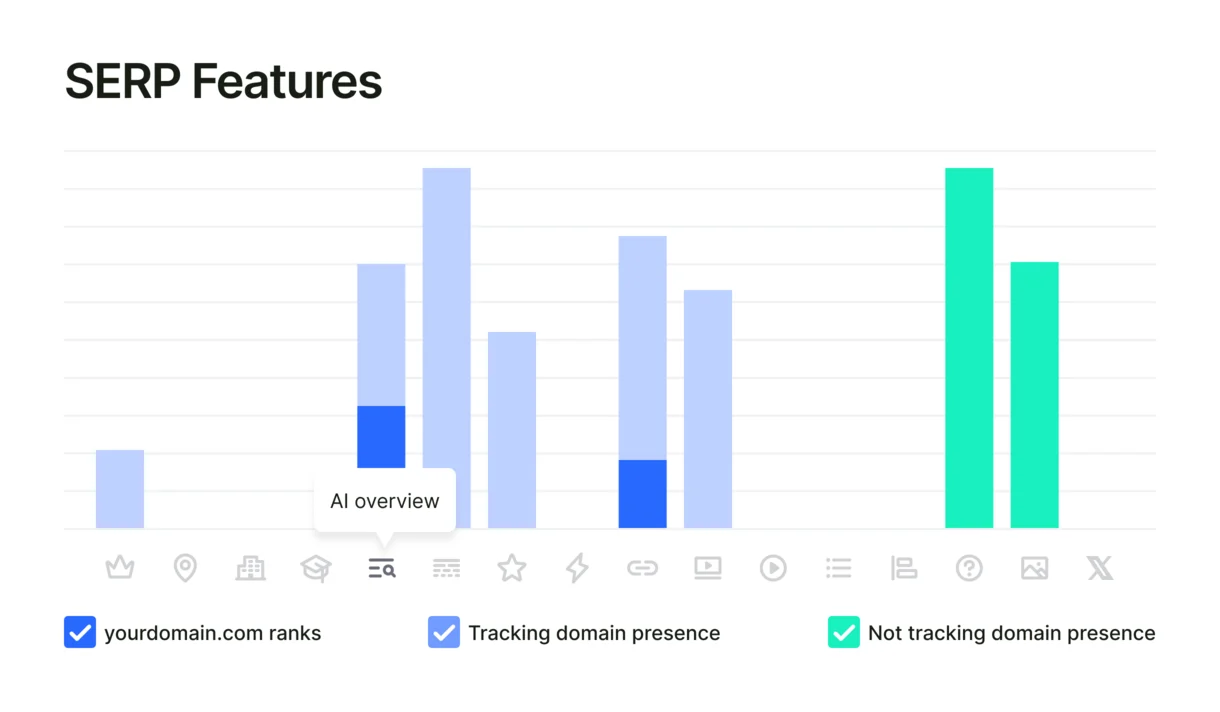
What makes Semrush stand out is the SERP Features report. You can see exactly when your pages appeared in a featured snippet, an image pack, or a People Also Ask box. In 2026, with AI Overviews reshaping the first page, that visibility data is gold.
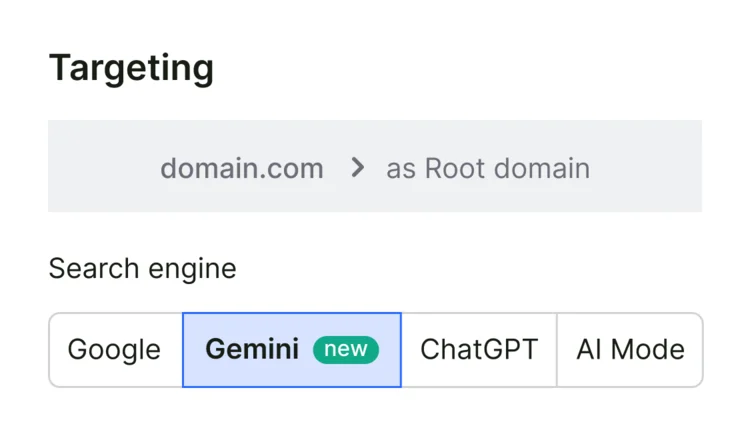
The Visibility Score is the killer feature. It aggregates your rankings into a single percentage that tells you at a glance how dominant you are for your tracked keywords. When that number moves, you know something happened.
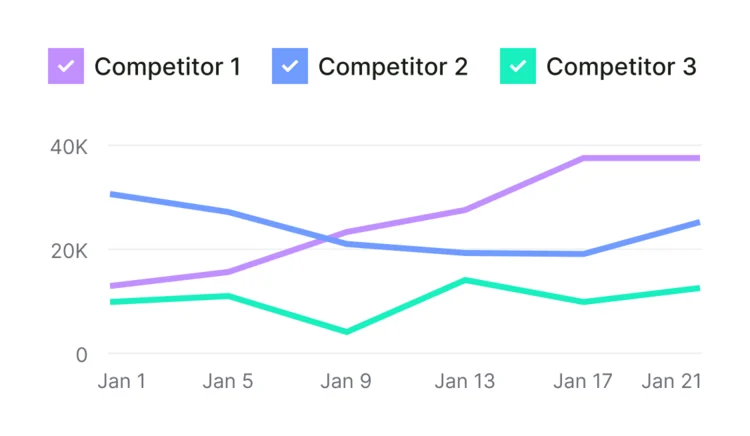
Competitor tracking is excellent. Track up to 20 competitors and see their position changes alongside yours. If a competitor jumped from position 15 to position 3 overnight, you’ll see it immediately.
The SERP Features dashboard shows which SERP features are appearing for your keywords and whether you’re capturing them. This is increasingly important as AI Overviews claim more real estate on page one.
Daily ranking updates mean you catch algorithm changes as they happen. Device-level breakdowns (desktop vs. mobile) are built in.
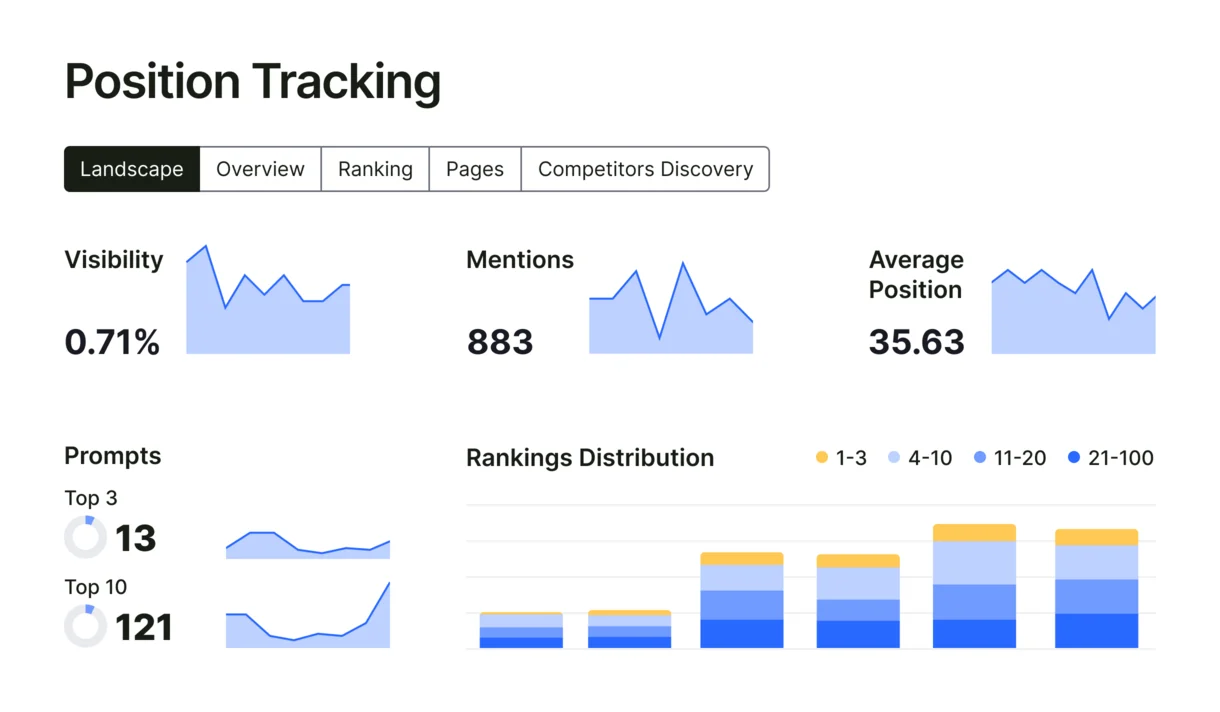
What I don’t love: Semrush is expensive if you only need rank tracking. The keyword limit on lower plans can also be constraining for larger sites.
Pricing (as of November 2026): SEO plan from $139/mo, Starter from $199/mo, Pro+ from $299/mo.
Best for: Marketing teams and agencies that need rank tracking plus SEO research, competitive analysis, and content tools in one platform.
2. Ahrefs – Best for Data Depth
Ahrefs built its reputation on backlink data. Its rank tracker lives up to the same standard.
The Rank Tracker in Ahrefs gives you clean, accurate position data with one of the best historical archives in the industry. The Growth Chart view lets you see your keyword portfolio performance over time — not just individual keywords.
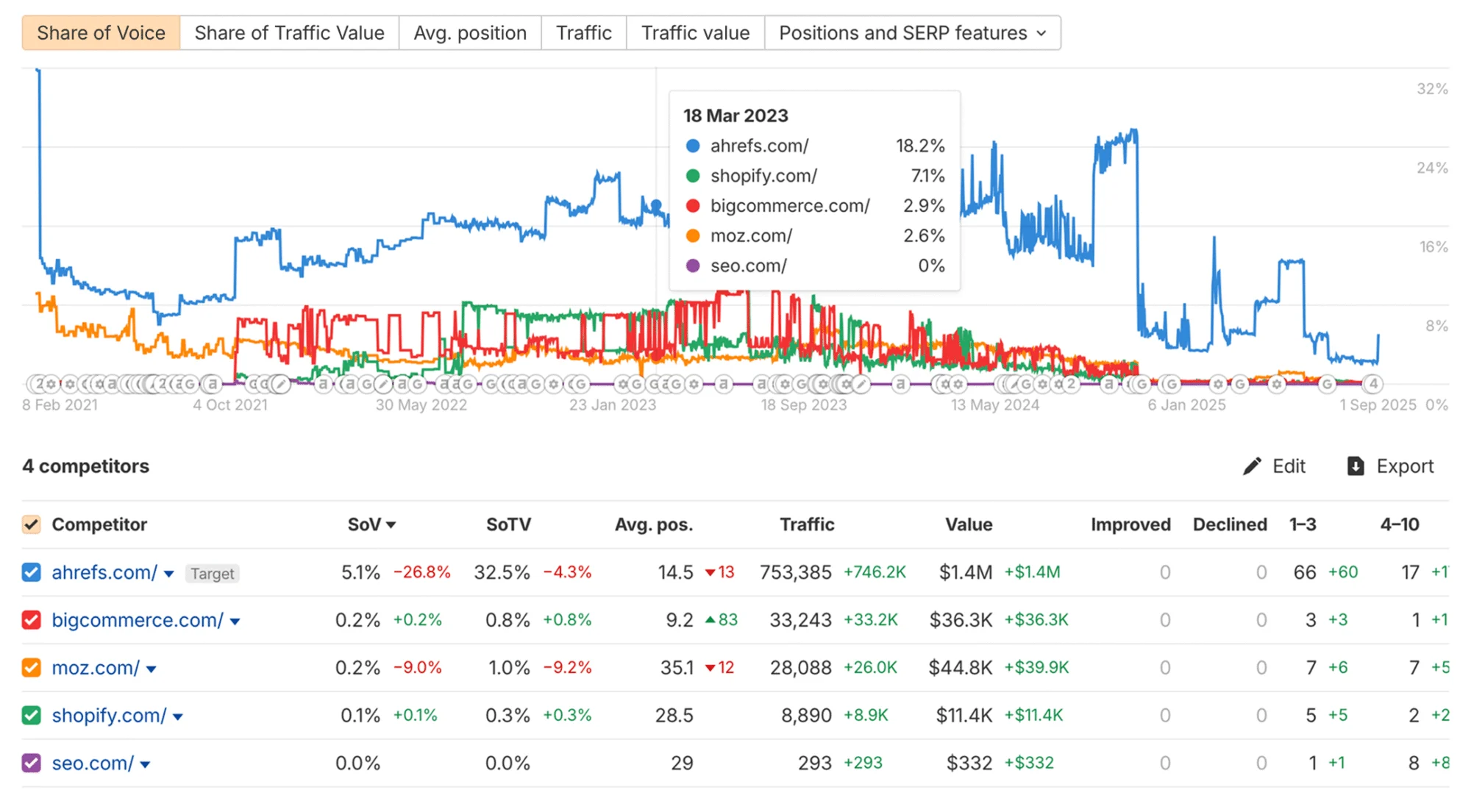
What Ahrefs does uniquely well: the SERP History feature. For any keyword, you can scroll back and see what ranked where, months or years ago. That historical context is invaluable when you’re diagnosing why a page lost rankings.
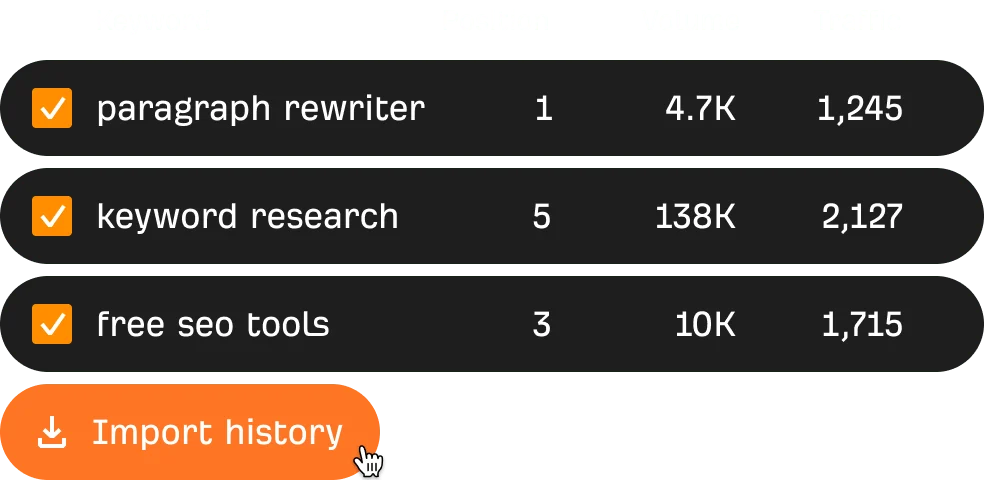
The Share of Voice metric is quietly one of Ahrefs’ best features. It tells you what percentage of total possible organic clicks in your tracked keyword set you’re capturing. It contextualizes your rankings as actual traffic potential, not just position numbers.
Ahrefs added AI Overview tracking in 2025. If your keywords are showing AI-generated answers, you can see when your content is cited in them.
What I don’t love: The UI is data-dense. First-time users find it overwhelming. The Starter plan’s keyword limits are low enough to be frustrating for anyone tracking more than a few hundred terms.
Pricing (as of November 2026): Starter from $29/mo, Lite from $129/mo, Standard from $249/mo.
Best for: SEO professionals who want the most accurate ranking data and the best SERP history in the industry.
3. SE Ranking – Best Value for Mid-Market
SE Ranking punches well above its price point. This is the tool I recommend to solo SEOs and small agencies who need Semrush-level features without the Semrush price tag.
The dashboard is clean and genuinely useful. Daily ranking updates, local tracking down to city level, mobile vs. desktop splits — it’s all there.
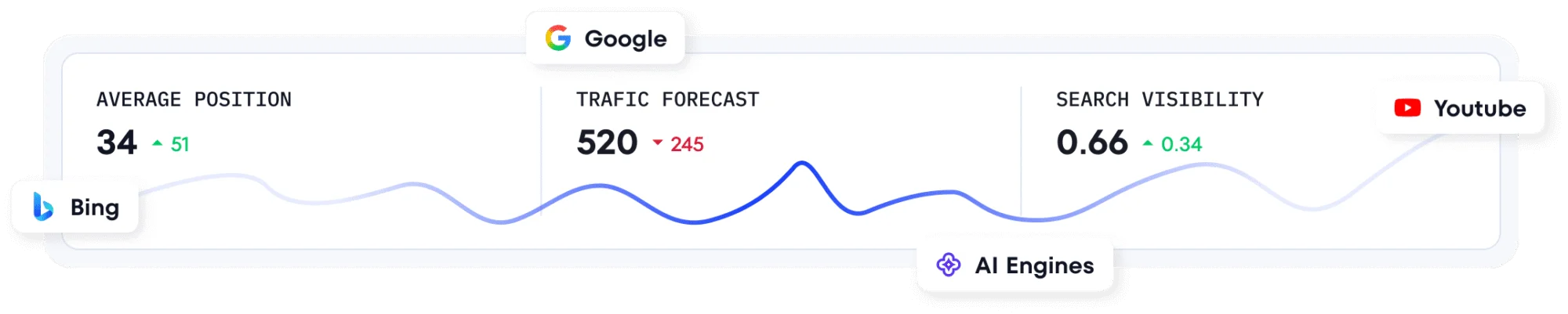
The rankings data view is well-organized. Position, change, search volume, and estimated traffic all visible in one clean table.
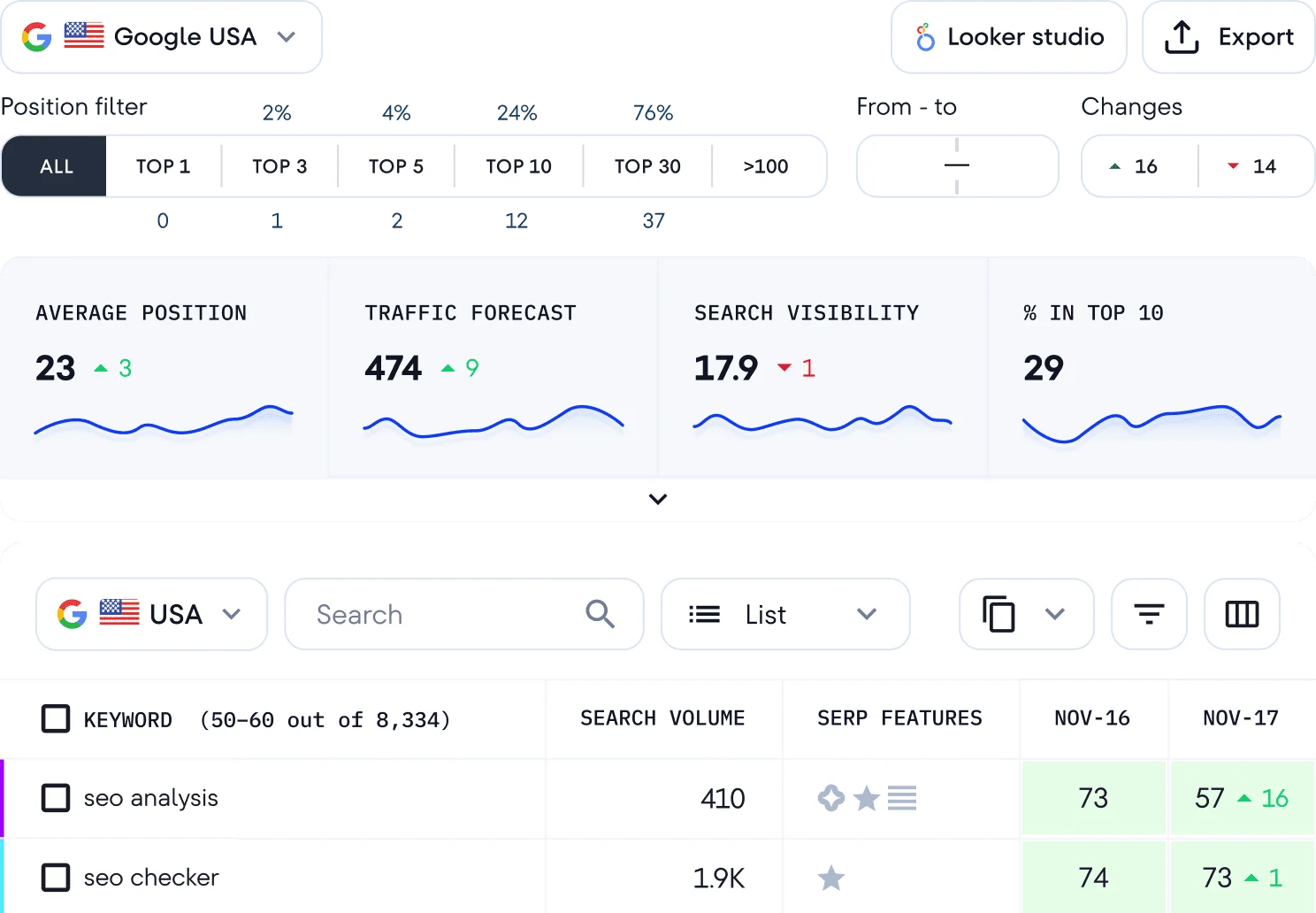
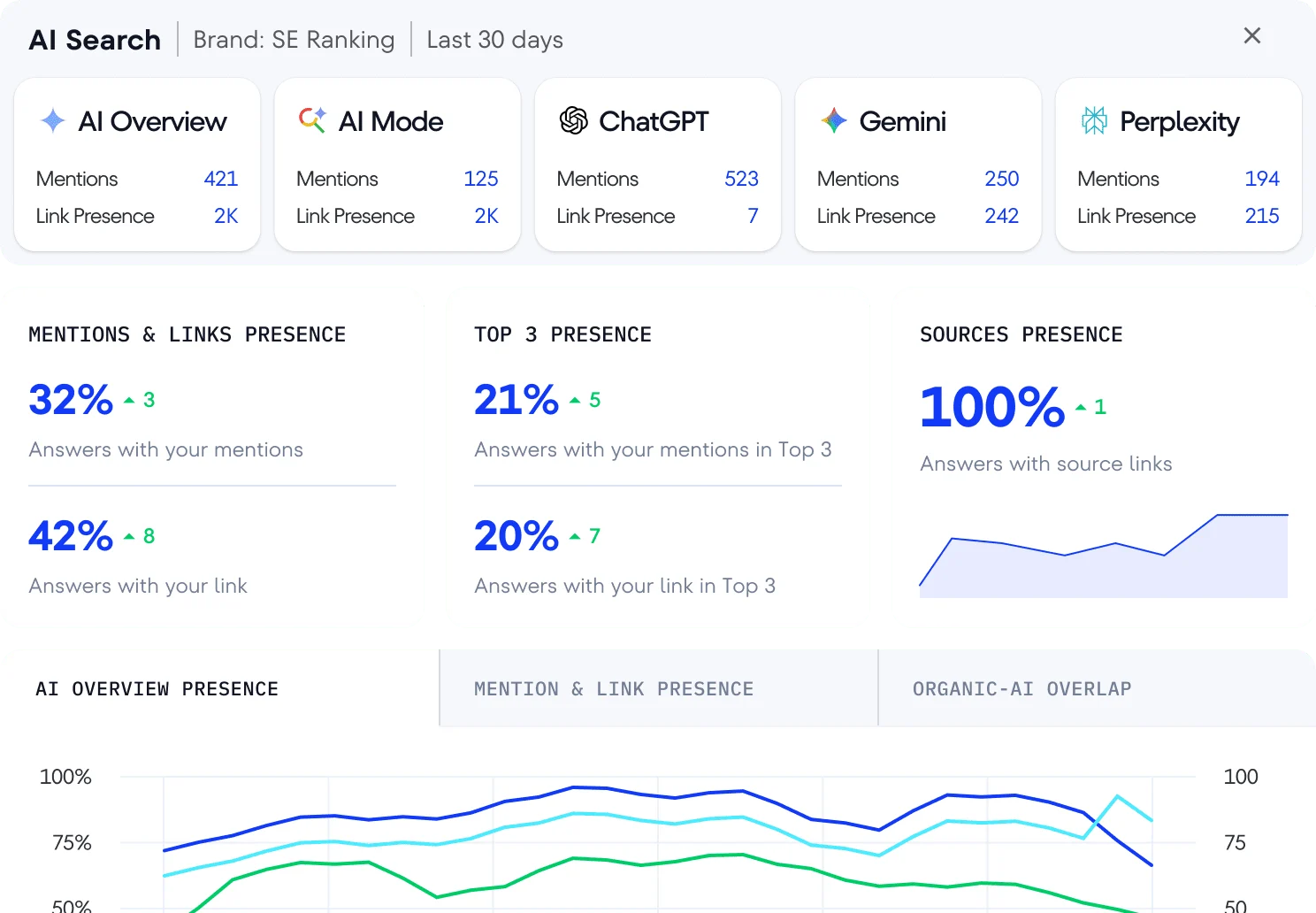
SE Ranking’s AI Search Visibility tracking is ahead of most competitors. In 2026, with Google’s AI Overviews eating up search real estate, knowing whether your content appears in AI-generated answers is a critical metric. SE Ranking tracks this natively.
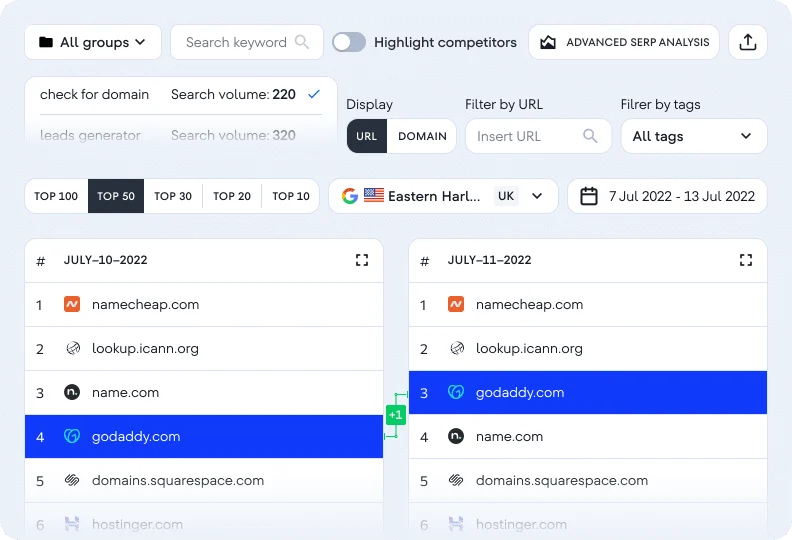
SERP competitor analysis shows who else is ranking for your target keywords and how their positions are shifting. I’ve cross-checked this against manual SERP checks and found it consistently accurate.
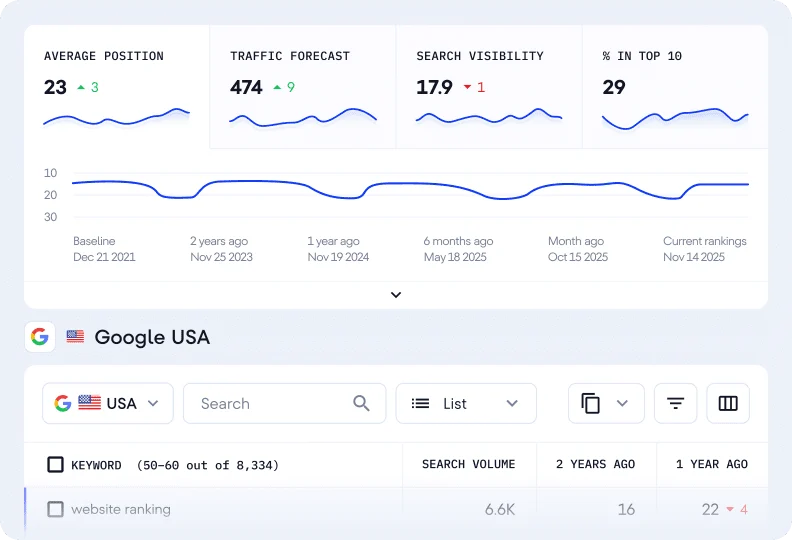
Historical ranking data goes back further than most tools at this price point. That long view matters when you’re presenting quarterly SEO results to a client.
The rankings breakdown by device and location gives granular control over what you’re tracking — especially useful for local SEO campaigns.
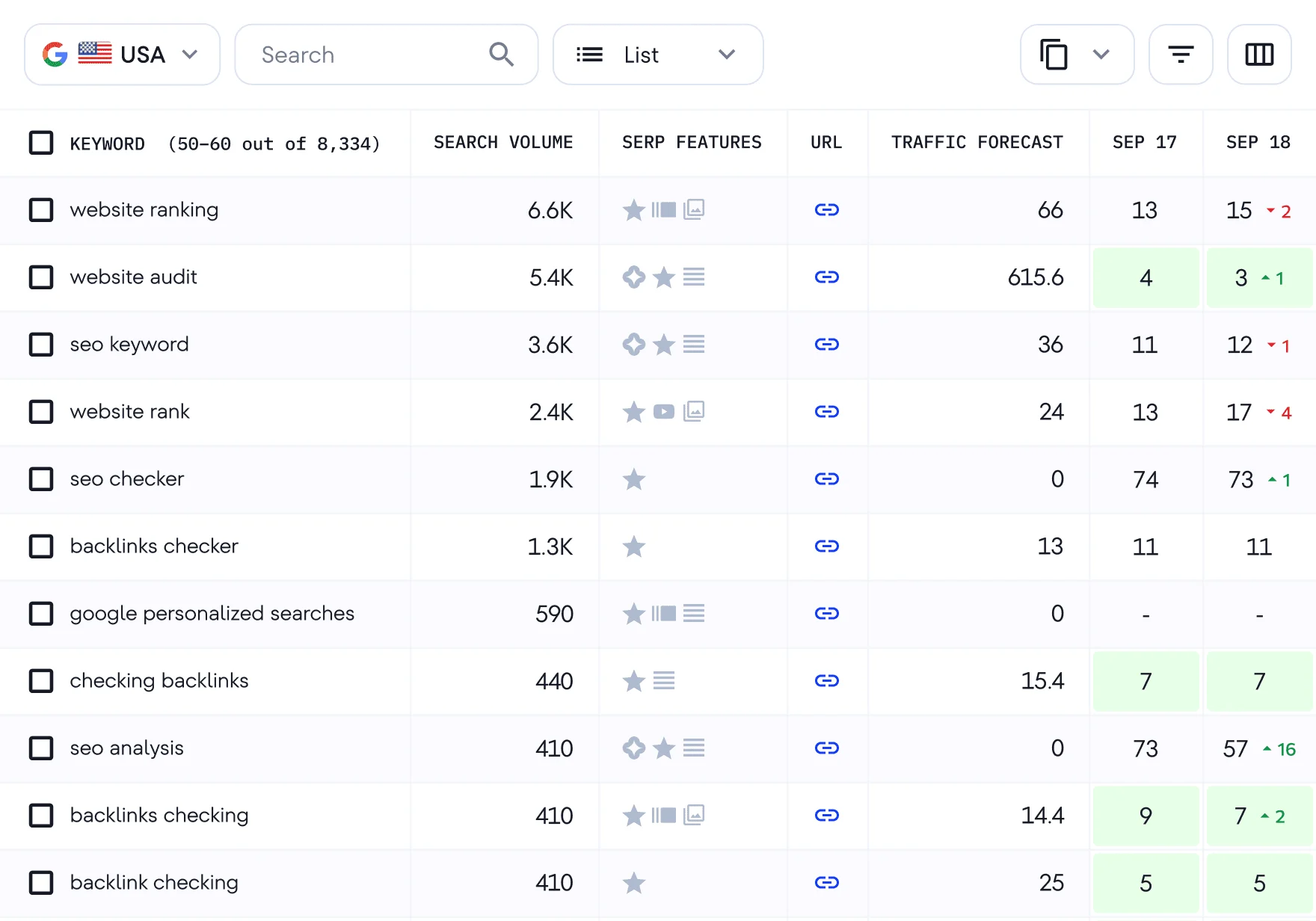
What I don’t love: The keyword database isn’t as deep as Semrush or Ahrefs for research purposes. SE Ranking is best-in-class as a rank tracker; treat it as a secondary tool for keyword research.
Pricing (as of November 2026): Core from $129/mo, Growth from $279/mo.
Best for: Solo SEOs and small agencies who want professional-grade rank tracking without paying Semrush prices.
4. AccuRanker – Best for High-Volume Agency Tracking
AccuRanker built one thing and built it very well: fast, accurate rank tracking at scale.
This isn’t a generalist SEO tool. There’s no keyword research, no backlink analysis, no site audit. It’s a rank tracker. Period.
What you get for that focus: extremely fast updates (on-demand refresh in minutes), highly accurate position data, and a clean reporting system that makes client deliverables straightforward.
AccuRanker tracks Google, Bing, YouTube, and Baidu. Local tracking is granular — city, zip code, GPS coordinates. If you’re doing hyperlocal SEO for clients, this matters.
The Share of Voice report aggregates your keyword performance into a market share metric. For agencies presenting results to clients, this is a compelling number to anchor a report around.
What I don’t love: AccuRanker is priced for agencies. If you’re tracking fewer than 1,000 keywords, you’re not getting full value. It also lacks any built-in content or competitive intelligence features.
Pricing (as of November 2026): Professional plan from $269/mo (2,000 keywords), Expert from $929/mo.
Best for: SEO agencies managing multiple clients with large keyword sets who need fast, accurate tracking and professional reporting.
5. Mangools – Best Budget Ranking Software
Mangools is proof you don’t need to spend $200/month to get reliable rank tracking.
The SERPWatcher tool inside Mangools is straightforward and accurate. You set up a tracking campaign, choose your location, and get daily updates. The Dominance Index score — similar to Semrush’s Visibility Score — gives you a headline metric to track over time.
The interface is genuinely the easiest on this list. If you’re new to rank tracking or want something with no learning curve, Mangools is the fastest to get value from.
Mangools bundles five SEO tools in one subscription: KWFinder (keyword research), SERPChecker (SERP analysis), SERPWatcher (rank tracking), LinkMiner (backlinks), and SiteProfiler (site metrics). That’s remarkable value at the Basic price point.
What I don’t love: Mangools’ database is smaller than Semrush or Ahrefs. Some niche keywords won’t have volume data. Search volume estimates can be less reliable for hyper-local queries.
Pricing (as of November 2026): Basic from €37/mo (~$40/mo), Premium from €52/mo, Agency from €97/mo. Prices in EUR.
Best for: Bloggers, small business owners, and solo SEOs who want reliable rank tracking without overspending.
6. Google Search Console – Best Free Ranking Software
You’re leaving data on the table if you’re not using Google Search Console.
GSC shows you which queries drive impressions and clicks, your average position per query, and how those numbers change over time. It’s not a traditional rank tracker — it shows impression-weighted average position rather than a snapshot at a fixed point in time — but for free, it’s indispensable.
The 16-month data retention means you can compare YoY performance without paying for historical data. Performance reports break down by country, device, and search type (web, image, video).
What I don’t love: GSC doesn’t show you rank for keywords you haven’t appeared in search results for yet. It won’t track competitor rankings. For serious SEO work, GSC supplements a paid tracker — it doesn’t replace one.
Pricing: Free.
Best for: Anyone who wants a starting point. Use GSC as a floor, then add a paid tracker when you have the budget.
Comparison: Best Ranking Software at a Glance
| Tool | Starting Price | Update Frequency | Entry Keyword Limit | Local Tracking | AI Overview Tracking |
|---|---|---|---|---|---|
| Semrush | $139/mo | Daily | 500 keywords | City-level | Yes |
| Ahrefs | $29/mo | Weekly (Starter) / Daily (Lite+) | 750 keywords | City-level | Yes |
| SE Ranking | $129/mo | Daily | 500 keywords | City-level | Yes |
| AccuRanker | $269/mo | On-demand | 2,000 keywords | Zip/GPS | No |
| Mangools | €37/mo | Daily | 200 keywords | Country-level | No |
| Google Search Console | Free | Continuous | Unlimited | Country-level | No |
How to Choose the Right Ranking Software
Budget under $50/mo: Mangools. Best all-in toolkit at that price, with reliable rank tracking for most use cases. Or use Google Search Console free and invest the budget elsewhere.
Solo SEO or small team, $100–$150/mo budget: SE Ranking. Closest thing to a Semrush alternative at a fraction of the price. The AI search visibility tracking is particularly good in 2026.
Marketing team that needs an all-in-one platform: Semrush. The Position Tracking module integrates with the rest of the suite. If you’re already using Semrush for keyword research or competitor analysis, the rank tracking is a natural add-on.
SEO pro who lives in data: Ahrefs. The SERP history and backlink-to-rank correlation features are unmatched. The Starter plan is a cheap way to test it.
Agency with large client rosters: AccuRanker. High-volume tracking, fast refresh rates, clean client reports. The price is steep, but the focus on pure rank tracking at scale makes it worth it for agencies.
Related: Best AI Tools for Content Marketing
The Verdict
For most people: SE Ranking.
It hits the sweet spot between price and capability. Daily tracking, AI search visibility, local tracking, clean UI — and it costs less than Semrush’s cheapest plan. If you outgrow it, you’ll know, and by then you’ll have the revenue to justify Semrush.
If budget is no object: Semrush. The all-in-one integration is genuinely worth the premium when you’re using the full platform.
If you’re just getting started: Google Search Console + Mangools. Free plus cheap gets you 80% of what a pro setup would give you.
The wrong tool here isn’t a catastrophe — ranking software is easy to migrate. What matters is that you’re tracking at all.
Frequently Asked Questions
What is ranking software?
Ranking software (also called a rank tracker or keyword rank tracker) is a tool that monitors where your website appears in search engine results for specific keywords. It records your position over time, showing whether your SEO efforts are moving you up or down the rankings.
How often should ranking software update?
Daily updates are the standard for professional rank trackers. Some tools offer on-demand updates (AccuRanker, for example) which let you refresh a specific keyword instantly. Weekly updates — like Ahrefs’ Starter plan — are acceptable for low-budget setups but limit your ability to react quickly to algorithm changes.
Is Google Search Console a rank tracker?
Partially. GSC shows average position for queries your site appeared for, but uses a different methodology than traditional rank trackers. It doesn’t show exact real-time position, doesn’t track competitors, and only covers queries where you’ve already appeared. It’s a valuable free data source, not a replacement for paid ranking software.
How accurate is ranking software?
Accuracy varies by tool and location. SERP results vary based on user location, device, and personalization. Good rank trackers control for this by checking from fixed proxy locations. AccuRanker, Semrush, and Ahrefs are generally considered the most accurate. Cross-check any tool against Google Search Console to validate accuracy for your site.
What’s the cheapest reliable ranking software?
Mangools at €37/month (~$40) is the best value at the budget tier. For free, Google Search Console gives you impression-weighted position data. If you need more than GSC but are price-sensitive, Mangools is the clear pick.